
Last updated September 23, 2026
Free visual inspection and a written scope of work before any mitigation begins - photos, moisture readings, and drying logs go in your claim file
The scope we write is the scope we bill. Anything new gets shown to you, in writing, before we touch it.
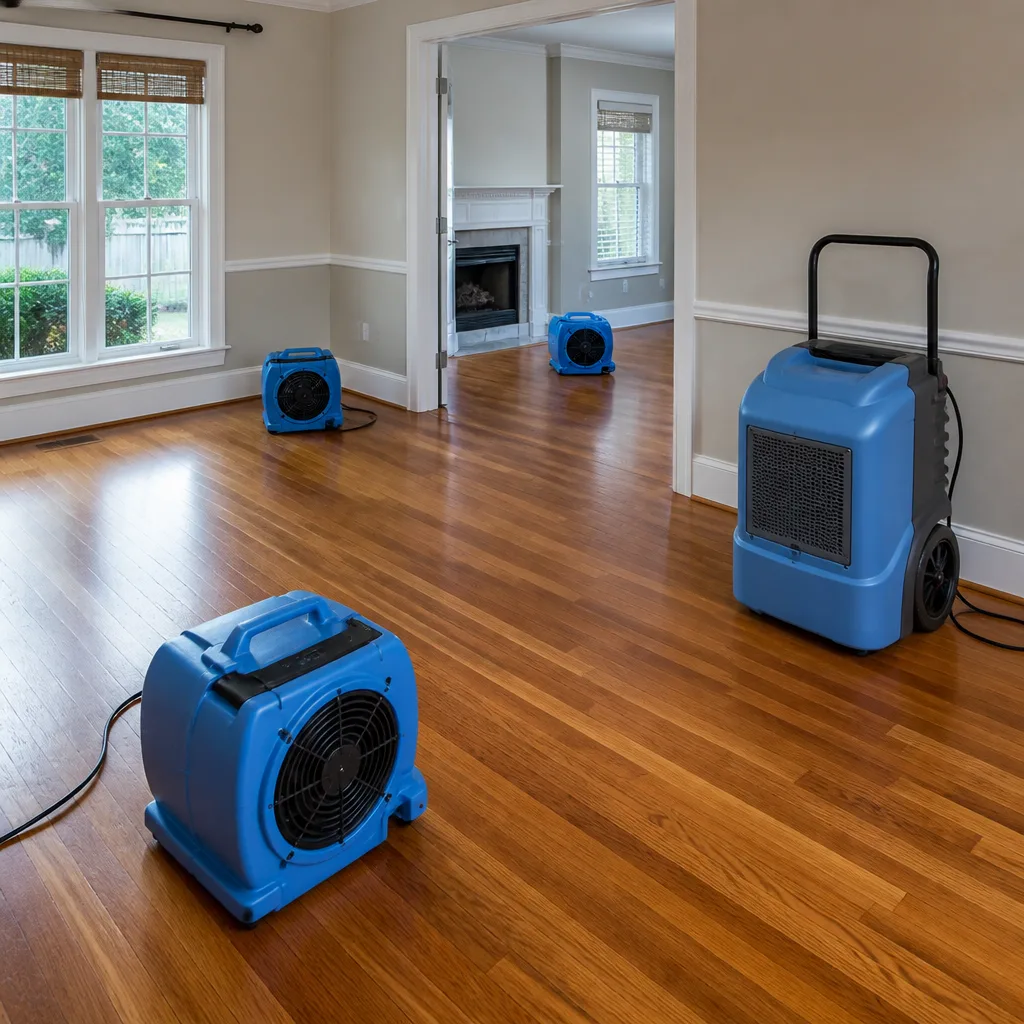


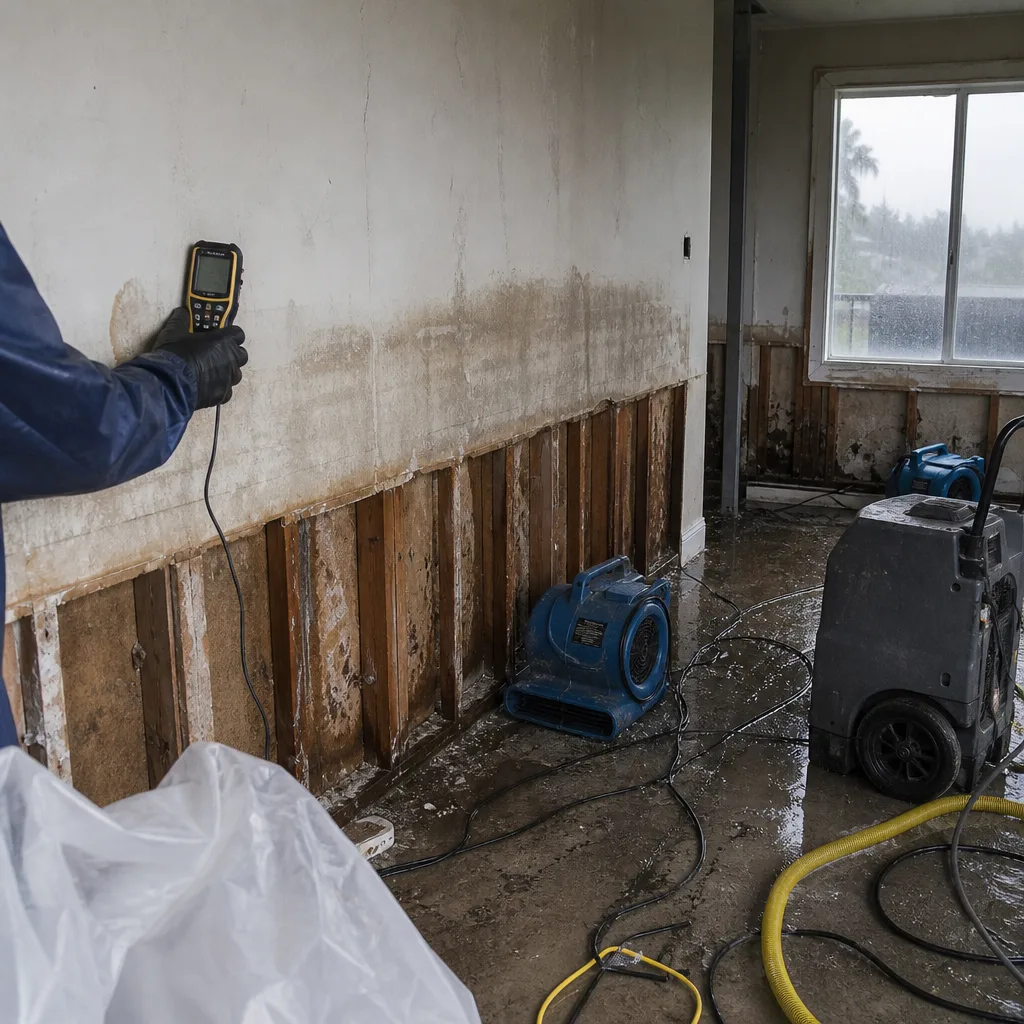 Before
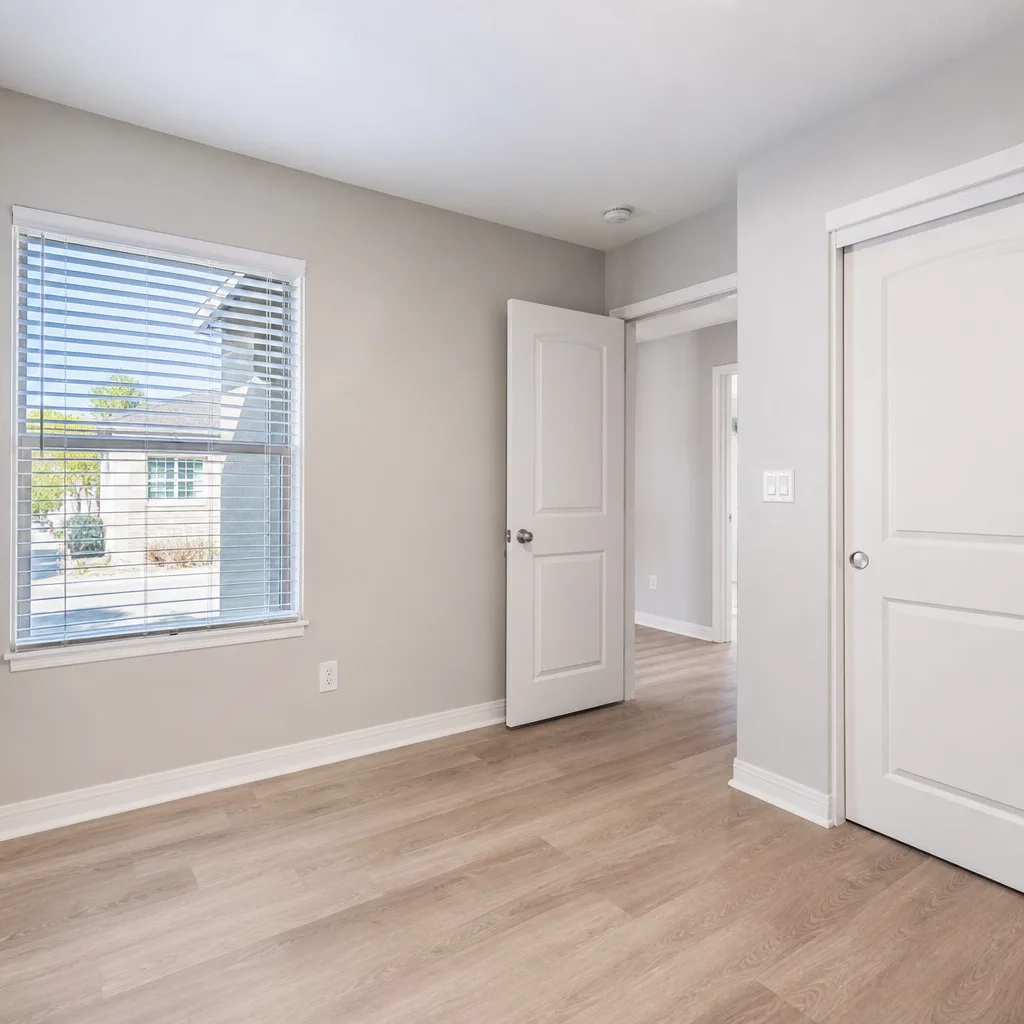 After
After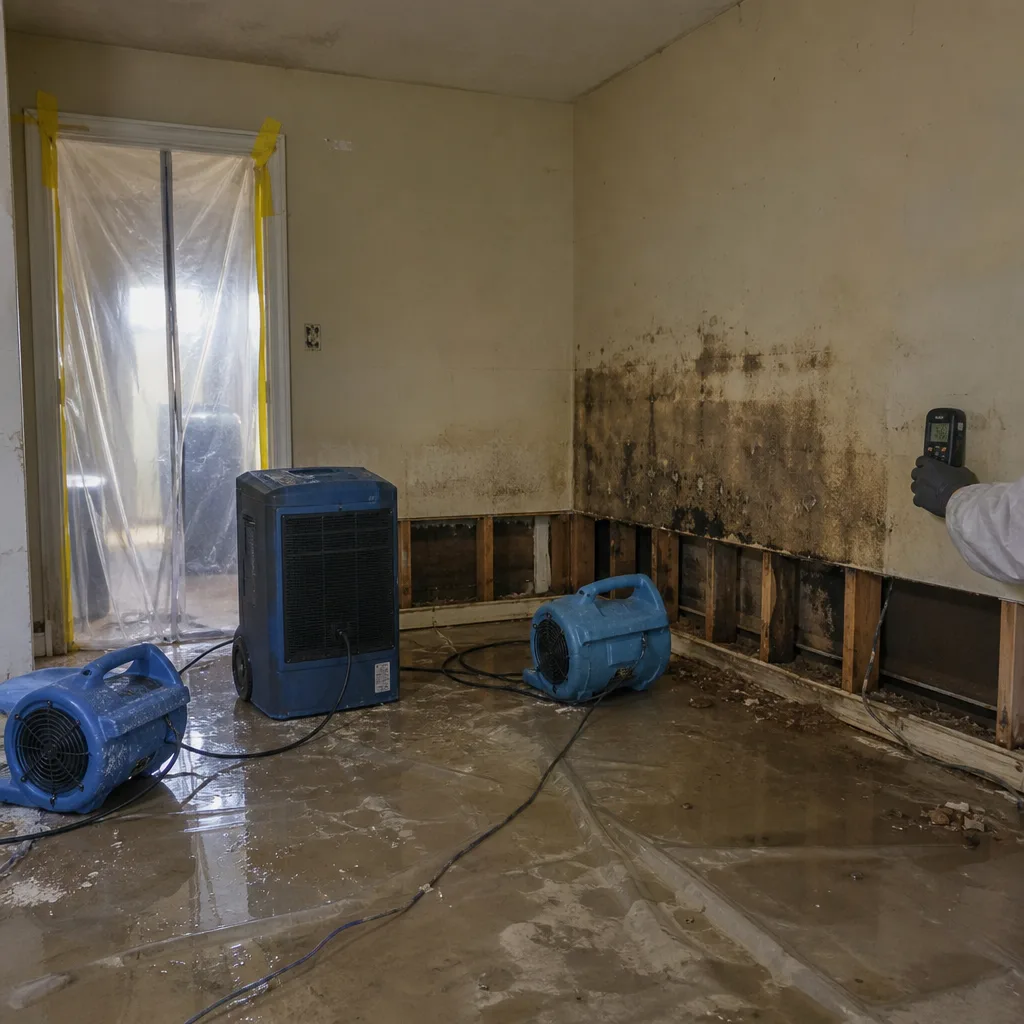 Before
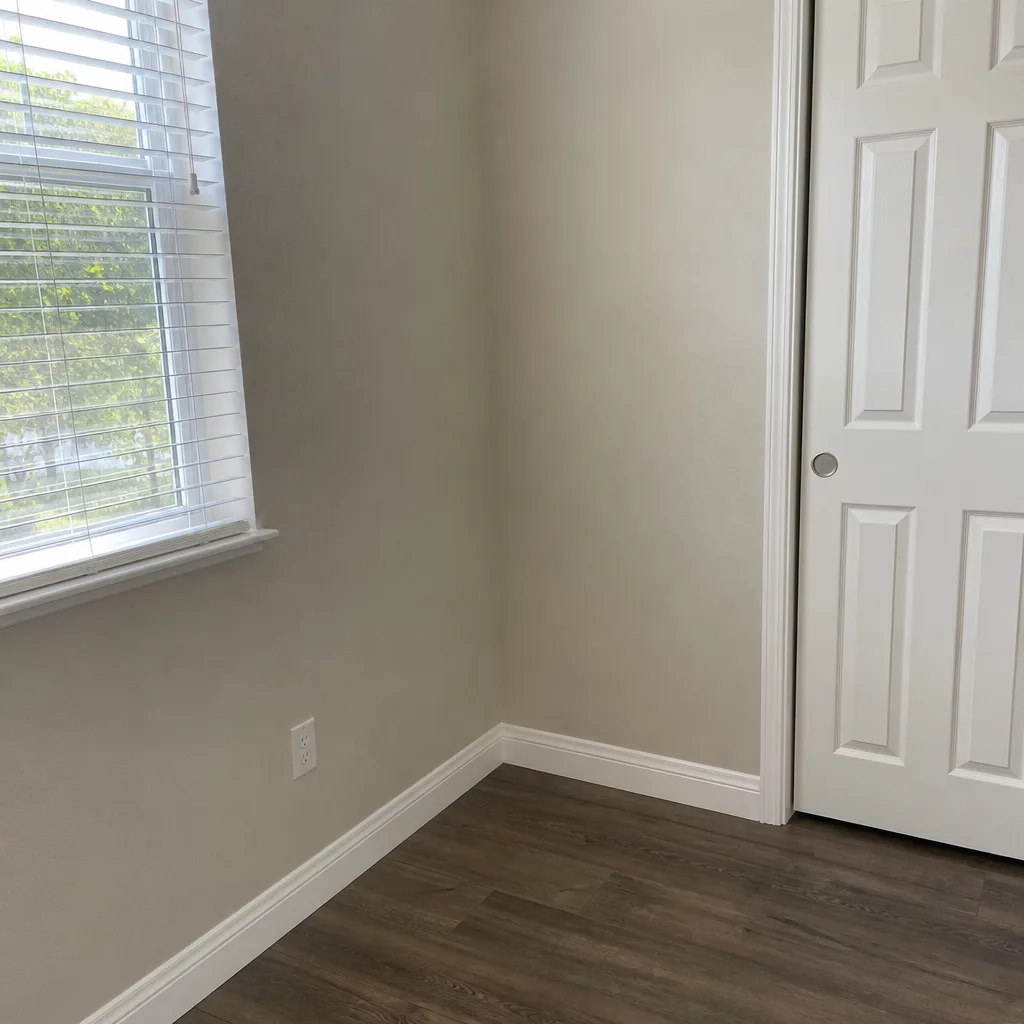 After
After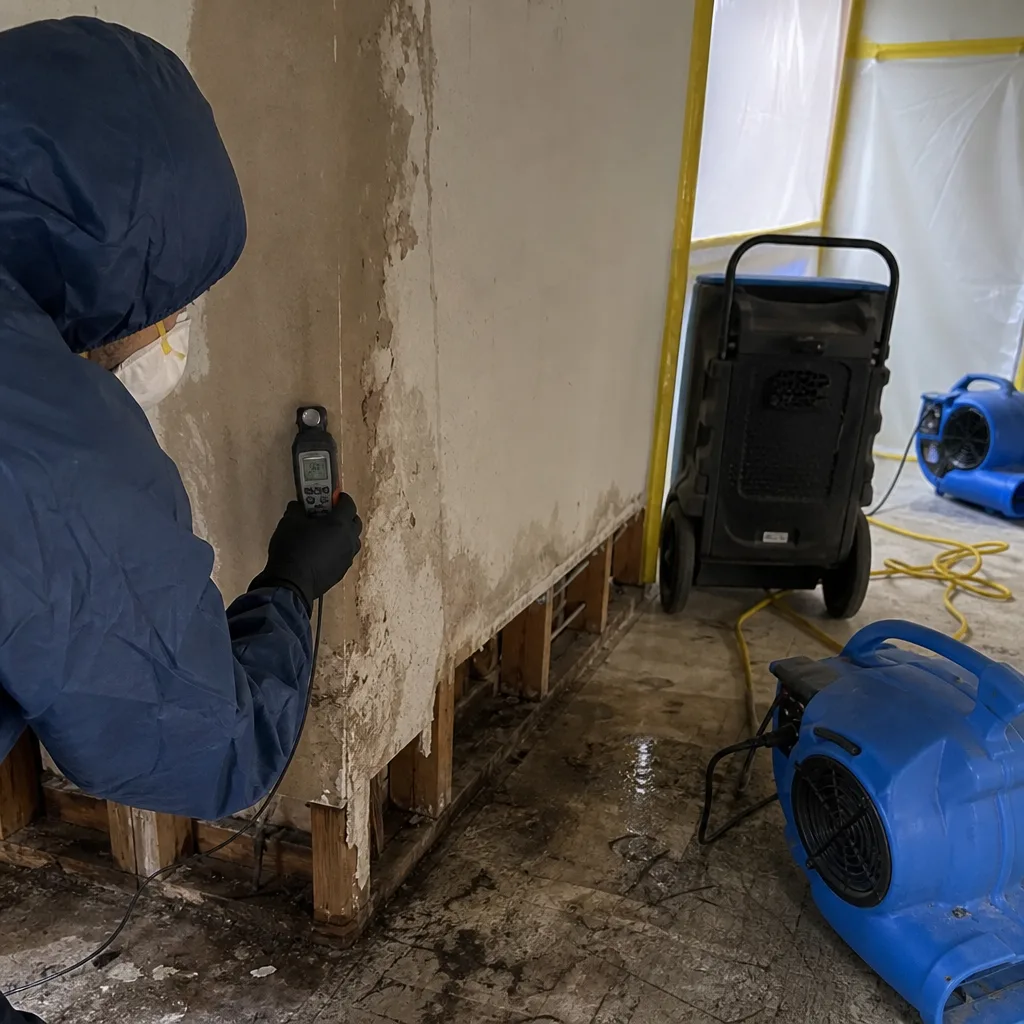 Before
 After
AfterDamage Restoration Warning Signs: A Carlsbad Homeowner’s Reference Guide
By the time a Carlsbad homeowner smells mold or sees a stain, the moisture content in the adjacent wall cavity has typically been above 19% for at least 72 hours. That means the real warning sign passed unmarked three days ago, while the damage was still invisible and the fix was still cheap. Most guides catalog obvious destruction: sagging drywall, blackened grout, warped floorboards. For seasonal damage restoration care for Carlsbad homes, timing matters as much as technique. This guide does the opposite. We’ll show you the measurable, pre-visible indicators you can detect with a $40 moisture meter and a phone camera, before a $200 repair becomes a $20,000 restoration project in a Carlsbad home.
Quick Answer
The earliest damage restoration warning signs in Carlsbad homes are measurable, not visible: moisture readings above 16% in wood framing, above 1% in concrete slab, or persistent relative humidity above 60% in conditioned spaces. These thresholds indicate active water intrusion or vapor migration before stains, odors, or structural distortion appear. A homeowner who documents these readings with dated photos creates pre-loss evidence that can streamline insurance claims if professional restoration becomes necessary. See our step-by-step guide to hiring a damage restoration contractor in Carlsbad before you need one.
Table of Contents
- Moisture Thresholds by Material: When a Number Becomes a Warning
- Carlsbad Construction Clues: Reading Stucco, Tile, and Baseboards
- Condensation or Intrusion? Two Mornings Tell the Truth
- HVAC and Crawl Space Warning Signs Carlsbad Homeowners Miss
- What to Photograph and When: Building a Pre-Loss Record
- Beyond Water: Early Signs of Mold, Fire Risk, and Storm Damage
- Common Mistakes to Avoid
- When to Call a Professional
- Frequently Asked Questions
BeforeAfterMoisture Thresholds by Material: When a Number Becomes a Warning
Every building material has a moisture content threshold where microbial growth becomes possible, where fasteners begin to corrode, where adhesives lose their bond. The key is knowing the number and having the tool to measure it.
Drywall and Gypsum Board
Standard 1/2-inch drywall in Carlsbad homes is manufactured at approximately 5% moisture content by weight. In our experience across more than 12,000 restored homes since 2011, gypsum board becomes a risk substrate when its moisture content exceeds 15% for more than 48 hours. At 19%, paper facing begins to delaminate and mold colonization becomes likely. A pin-type moisture meter with insulated pins (we use Delmhorst and Protimeter models on every job) can measure at depth without surface moisture skewing the reading. Insert pins at a 45-degree angle through the paint layer, not straight in, to reach the core without creating a visible puncture.
Wood Framing and Structural Lumber
Kiln-dried Douglas fir and SPF (spruce-pine-fir) framing common in Carlsbad construction should read 9-14% in normal conditions. The critical threshold is 16%: at this level, wood-decay fungi activate, and the structural integrity timeline begins. At 20%, we consider lumber compromised for load-bearing applications and document it for replacement in our written scope. A pinless meter works for quick screening but can be fooled by dense grain patterns or surface treatments; confirm suspicious readings with a pin meter at 3/4-inch depth.
Concrete Slab and Masonry
This is where Carlsbad homeowners get surprised. Concrete reads “dry” at 75-80% relative humidity internally, which confuses people expecting low numbers. The actionable metric is moisture vapor emission rate (MVER), measured in pounds per 1,000 square feet per 24 hours. Anhydrous calcium chloride testing, per ASTM F1869, yields the definitive number: 3 lbs or below is acceptable for most flooring installations; above 5 lbs indicates active vapor drive that will destroy adhesive bonds and create sub-floor mold. For quick homeowner screening, tape a 12-inch square of clear polyethylene sheeting to the slab for 72 hours. Condensation underneath indicates excessive vapor pressure differential, the force that pushes moisture through seemingly solid concrete.
How to Take a Reading That Matters
- Calibrate your meter against the manufacturer’s reference standard monthly, or after any drop.
- Record the date, time, outdoor temperature, and whether HVAC was running. Psychrometric data without context is useless.
- Take three readings per location: center of the suspect area, 12 inches toward the nearest plumbing fixture, and 12 inches toward the exterior wall. Pattern reveals source.
- Photograph the meter display with the location visible in frame. This creates a dated, geolocated record.
- Re-measure at the same locations after 24 and 48 hours. Single readings diagnose conditions; trends diagnose problems.
At Water Damage Restoration in Carlsbad, our technicians arrive with meters calibrated to NIST-traceable standards, but the homeowner who has already documented a rising trend saves us diagnostic time and saves themselves deductible money by catching the issue before secondary damage spreads.
Carlsbad Construction Clues: Reading Stucco, Tile, and Baseboards
Carlsbad’s dominant construction type, stucco-over-wood-frame with clay or porcelain tile flooring, creates specific moisture migration patterns that differ fundamentally from siding-and-carpet regions. Learning these patterns lets you read a wall like a map.
Efflorescence Patterns on Stucco
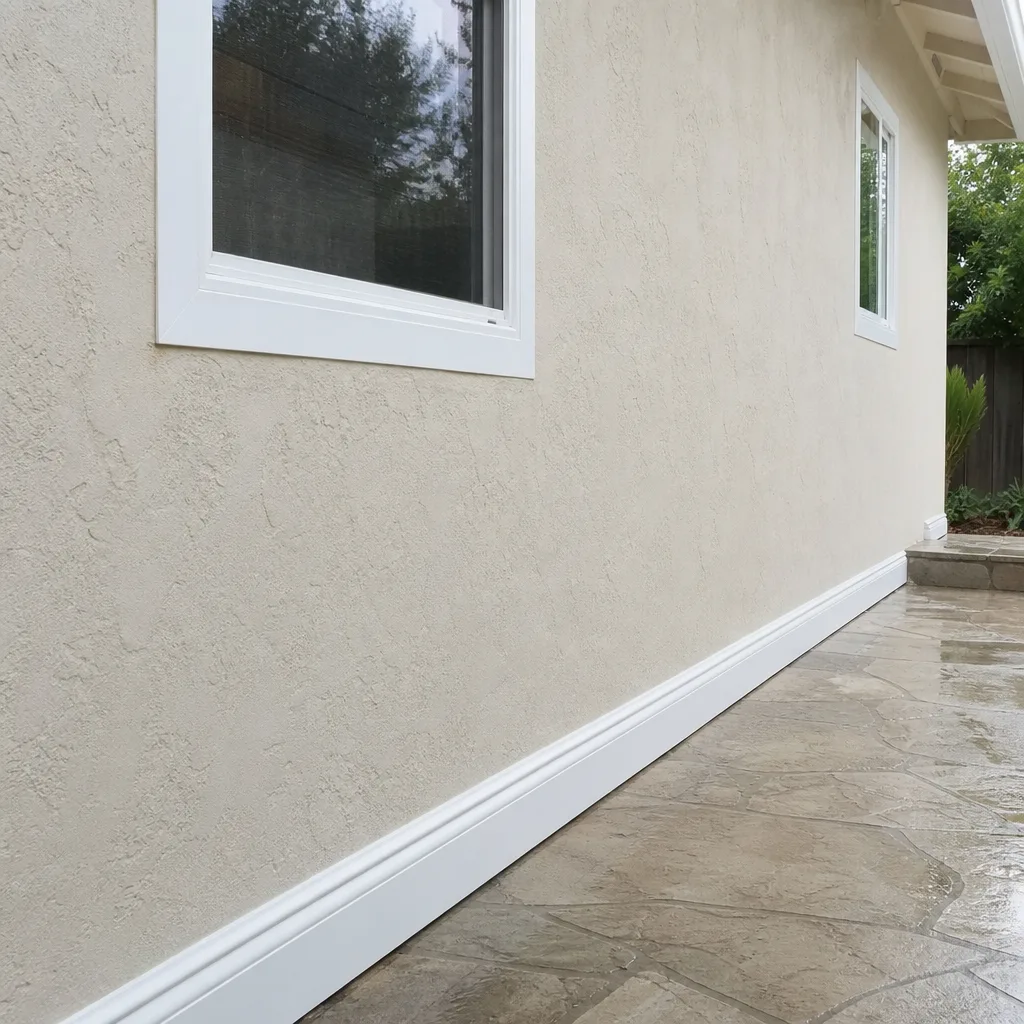
Efflorescence, the white crystalline deposit that appears on masonry and stucco surfaces, is dissolved salt transported by evaporating water. In Carlsbad’s coastal environment, where salt air is already present, efflorescence forms faster and means more. The pattern matters: a horizontal band at foundation level indicates capillary rise from saturated soil, common in the low-lying neighborhoods near Buena Vista Lagoon and the Agua Hediondo Creek corridor. A vertical streak below a window or door suggests flashing failure at the rough opening. Scattered, patchy efflorescence across a broad wall face often means bulk water intrusion through cracked stucco with compromised moisture barrier, a pattern we see frequently in 1990s-era construction where paper-backed lath has degraded.
Photograph efflorescence with a coin or ruler for scale, and note whether it reappears within 48 hours of washing. Persistent efflorescence means active water movement, not a historical event.
Grout Line Staining in Tile Floors
Clay-body grout is porous and hydrophilic; it wicks moisture from the sub-floor and concentrates dissolved minerals at the surface. In Carlsbad homes with slab-on-grade construction, darkened grout lines, especially near exterior walls or plumbing walls, often indicate slab vapor drive or a perimeter drainage failure. The critical distinction: uniform darkening across a room suggests a cleaning or sealing issue; darkening that follows a linear path toward a wall or that appears in a single corner indicates a moisture source below.
We document grout staining with raking light photography, light cast at a low angle across the surface, which reveals subtle color variation invisible in flat lighting. Homeowners can replicate this with a flashlight held at floor level.
Baseboard Paint Bubbling and Caulk Separation
Baseboards are the moisture detection system your builder didn’t know they installed. Paint bubbling at the bottom edge, caulk pulling away from the wall in a continuous ribbon, or MDF baseboard swelling at the bottom face all indicate wicking from floor to wall. In Carlsbad’s climate, where winter humidity can spike into the 80s while summer drops below 50%, seasonal expansion and contraction will cause minor caulk cracking. The warning sign is asymmetric damage: one wall, one corner, one room showing distress while adjacent areas remain intact. That asymmetry points to a point source, not climate.
We’ve replaced miles of baseboard in Carlsbad’s Bressi Ranch and La Costa Valley developments where homeowners assumed “settling” or “cheap materials” when the real cause was a failed shower pan or irrigation line breach against the foundation. A moisture meter reading at the baseboard bottom, compared to a reading 24 inches up the same stud bay, separates structural movement from moisture intrusion every time.
Condensation or Intrusion? Two Mornings Tell the Truth
Carlsbad’s coastal Mediterranean climate creates a specific diagnostic challenge: morning condensation on windows and cool surfaces can look identical to the early stages of vapor intrusion, and panicked homeowners call for water damage restoration when the real issue is air-sealing and ventilation balance.
The single-observation test fails here. A water droplet on a window sill at 6:30 AM tells you the surface was below dew point; it does not tell you why. The two-morning protocol separates benign condensation from active intrusion with measurable confidence.
Protocol: Two Consecutive Morning Readings
- On morning one, record: indoor temperature at the suspect surface, surface temperature with an infrared thermometer, outdoor temperature and relative humidity, and whether HVAC was operating overnight. Photograph the condensation pattern, including the full window or wall section for context.
- Implement one intervention: run the bath fan for 30 minutes before bed, or crack a window for cross-ventilation, or adjust the thermostat to reduce the temperature differential between indoor air and the surface. Document which intervention you chose.
- On morning two, record the same measurements at the same time. Photograph the identical frame.
- Compare: condensation eliminated or reduced by ventilation intervention indicates humidity load, not intrusion. Condensation unchanged or worsened suggests the surface is being cooled by evaporative effects from within the wall cavity, which means active moisture migration.
The science is straightforward but often missed. Condensation requires three conditions: moist air, a cold surface, and no air movement to disrupt the boundary layer. Intrusion adds a fourth: a moisture source within the assembly that maintains evaporative cooling even when room conditions change. Two mornings of data, with one controlled variable, distinguishes the three-condition scenario from the four.
In Carlsbad’s inland neighborhoods, Calavera Hills and Robertson Ranch, where nighttime temperature swings can exceed 25°F between summer and winter, we see seasonal condensation misdiagnosed as roof leaks annually. In the coastal zone near Carlsbad State Beach, where marine layer keeps morning humidity elevated for longer periods, the opposite error occurs: actual intrusion from wind-driven rain through compromised stucco is dismissed as “just the fog.” The two-morning protocol removes the guesswork.
If your readings suggest active intrusion, DryMark Restoration Carlsbad home provides documented moisture mapping that pinpoints the source and delivers a written scope before any equipment is deployed.
HVAC and Crawl Space Warning Signs Carlsbad Homeowners Rarely Inspect
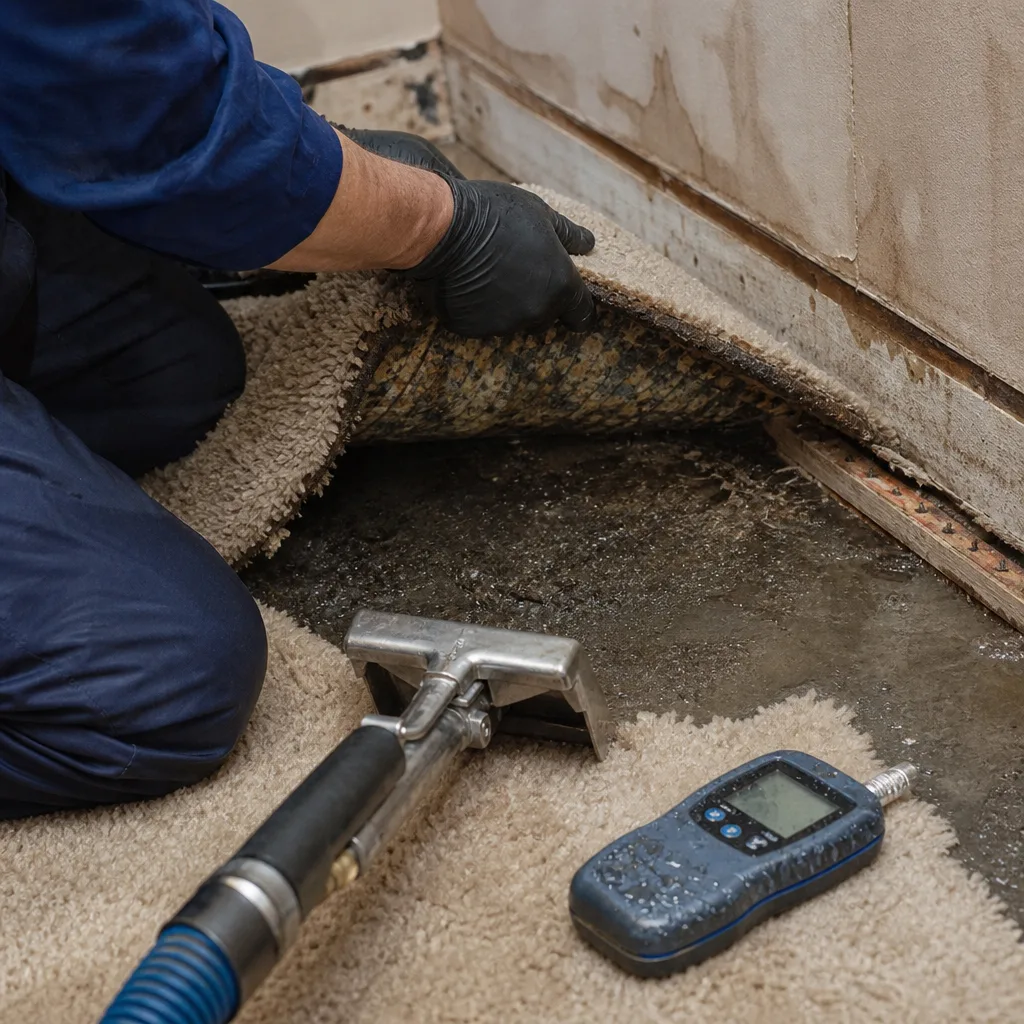
The most expensive damage we restore in Carlsbad often originates in spaces homeowners never enter: crawl spaces, attic HVAC platforms, and the mechanical closet where the furnace and water heater share confined air. These locations concentrate risk because they’re out of sight, often poorly ventilated, and subject to temperature differentials that drive condensation.
Crawl Space Indicators
Carlsbad’s older neighborhoods, the Village and Barrio areas with pre-1980 construction, frequently have unconditioned crawl spaces with dirt floors and perimeter venting that was code-compliant when built and is now understood to be problematic. Modern building science recognizes that vented dirt crawl spaces in humid climates import moisture faster than they exhaust it.
Standing water is the obvious sign, but it’s also the late sign. Pre-visible indicators include: insulation that has fallen from floor joists (saturated with condensation and too heavy to stay in place), wood joists that read above 18% moisture content with a pin meter, vapor barrier sheeting that has pooled water on its surface, and fungal growth on the barrier underside indicating chronic high humidity. We use thermal imaging in crawl spaces to identify the evaporative cooling signature of active water entry, visible as cold spots on the foundation wall that don’t correspond to known plumbing lines.
HVAC System Clues
The condensate drain line from your air handler is a designed water discharge point. When it clogs, water overflows the secondary pan, or bypasses it entirely if the pan is cracked or improperly sloped. Warning signs: rust or corrosion on the cabinet base, water stains on the platform or surrounding drywall, musty odor from supply vents when the fan first engages, and unusually high indoor humidity despite the system running continuously.
A specific Carlsbad pattern: homes with rooftop package units, common in developments with flat or low-slope tile roofs, experience condensate line degradation from UV exposure and thermal cycling. The PVC hardens, cracks at elbows, and leaks into the attic space. By the time a ceiling stain appears below, the insulation above has been a mold substrate for weeks. We document these with borescope photography through a 1/2-inch inspection port, preserving the ceiling finish while revealing the damage above.
Corroded Ductwork Connections
Galvanized ductwork in coastal Carlsbad corrodes faster than inland equivalents due to salt aerosol in the marine layer. Corroded connections leak conditioned air into unconditioned spaces, creating temperature differentials that drive condensation. The warning sign is not the corrosion itself, which requires access to see, but the system symptom: rooms that won’t maintain setpoint, supply registers with weak airflow, or energy bills that rise without usage change. These indicate pressure imbalance, which often traces to duct leakage that has also created a moisture pathway.
Our documentation protocol for HVAC-related moisture calls includes pressure testing the duct system, thermal imaging of the air handler cabinet, and moisture mapping of surrounding structural elements. The written scope specifies which components require restoration versus which need mechanical repair by an HVAC contractor, a distinction that protects homeowners from scope creep and protects their claim documentation from ambiguity.
What to Photograph and When: Building a Pre-Loss Record
Insurance claims fail on documentation gaps. The homeowner who can produce a dated photo sequence showing a condition’s progression from first warning sign to active damage has a claim that adjusts cleanly. The homeowner who cannot produces a claim that stalls, gets underpaid, or gets denied for failure to establish the loss date and cause.
We’ve built our entire company around this documentation gap. Our founder, Alicia Brennan, worked as a claims adjuster before establishing DryMark Restoration Carlsbad home in 2011, and the company’s protocols reflect what she saw denied: not the damage itself, but the proof that it was sudden and accidental rather than long-term maintenance neglect.
The Systematic Photo Record
- Establish the baseline. Photograph every wall, floor, and ceiling surface in your home annually, or after any significant weather event. Use consistent lighting, consistent angles, and include a dated newspaper or phone screenshot in frame for authentication. Store in cloud backup with upload timestamps.
- Document the first warning sign. When you detect any indicator from this guide, photograph it in three frames: wide context showing the room and adjacent surfaces, medium showing the affected area with a measuring reference, and close-up showing texture and detail. Include the moisture meter reading in frame if applicable.
- Record the progression. Re-photograph at 24-hour intervals until the condition is resolved or professional assessment occurs. Date-stamped progression photos eliminate disputes about whether damage was ongoing or sudden.
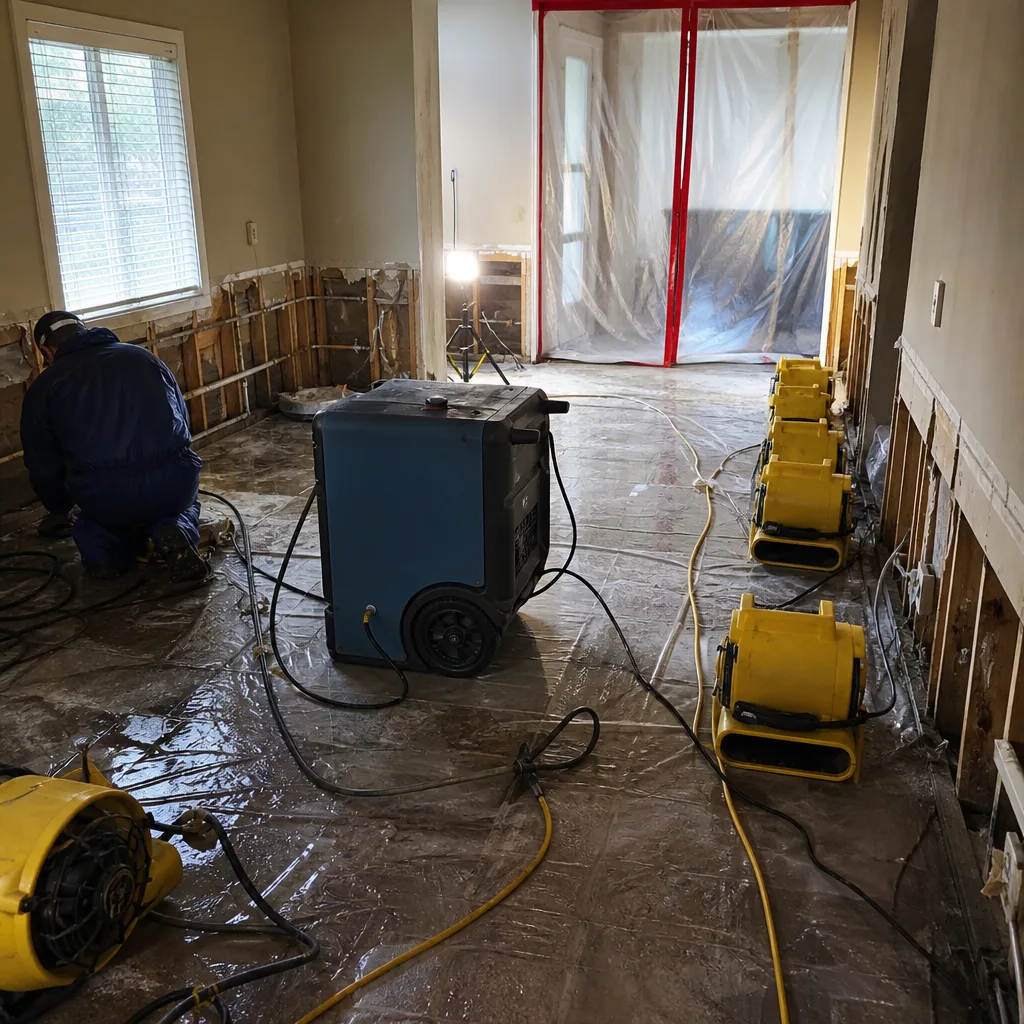
- Document your intervention. If you attempt mitigation, photograph before, during, and after. A photo of a running fan or dehumidifier with a timestamp proves you took reasonable steps to prevent secondary damage, a duty most policies impose.
- Preserve the professional record. When you hire a restoration company, request and retain every photo they take. At DryMark Restoration Carlsbad, our documented photo record on every visit is a standard deliverable, never an upsell, and we coordinate directly with adjusters who need specific angles for their files.
The Haven Standard, Clause 1 requires a written price before work begins; it also requires that the price be supported by the documentation that makes it defensible. Your photo record and ours, combined, create the evidence chain that turns a restoration invoice into a payable claim.
Beyond Water: Early Signs of Mold, Fire Risk, and Storm Damage
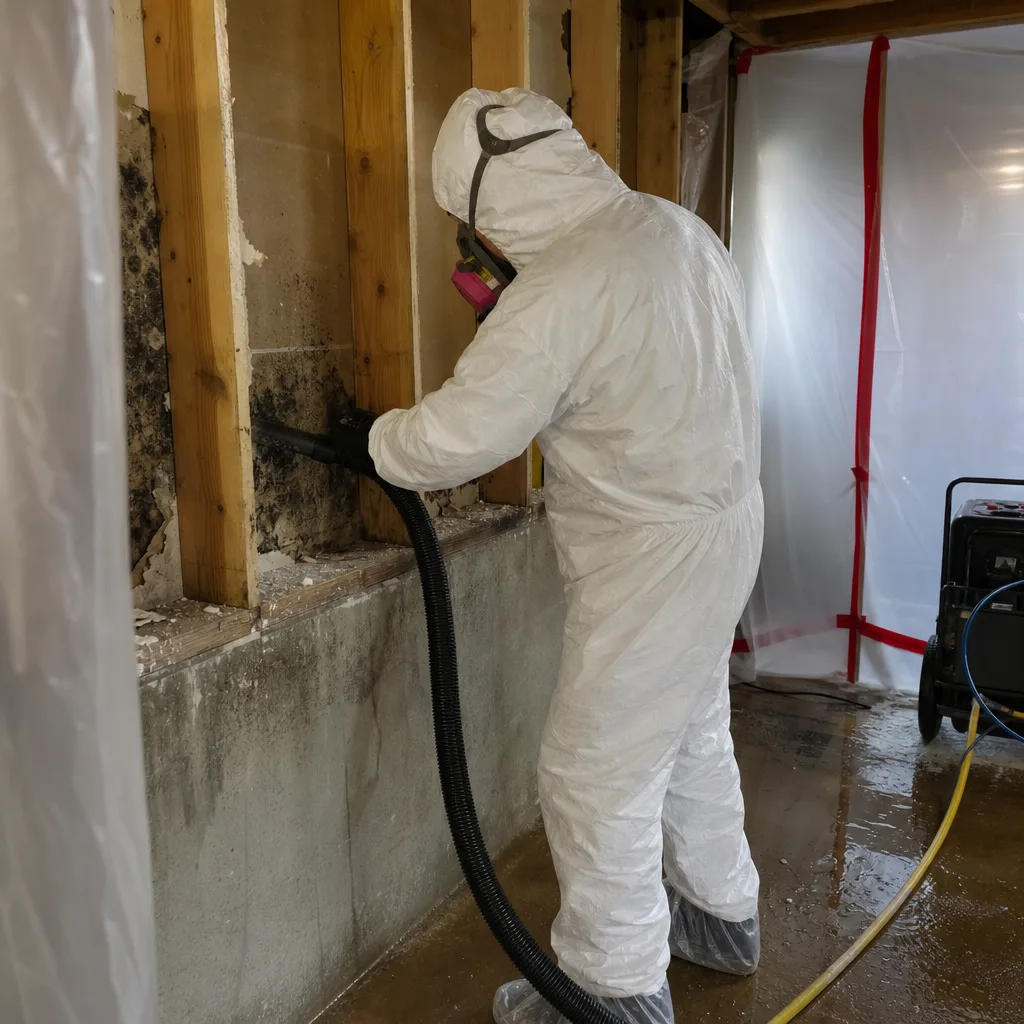
Water damage dominates restoration volume, but the documentation-first approach applies equally to mold, fire risk, and storm damage. Each has pre-visible indicators that a systematic homeowner can detect and record.
Mold: Before You Smell It
Mold requires moisture, organic substrate, and time. The 48-72 hour colonization window is well-established, but the pre-odor indicators are less known. A slight tackiness on painted surfaces, especially in bathrooms and kitchens where humidity fluctuates, indicates biofilm formation. Light fixtures that collect dust unusually fast may have positive pressure from a mold source creating micro-airflow. And the most reliable early indicator: a slight increase in relative humidity in one room compared to adjacent spaces, measured with a basic hygrometer, that persists despite HVAC operation.
In Carlsbad’s canyon-adjacent homes, particularly in developments near Lake Calavera and the El Camino Real corridor, we see mold colonization accelerated by temperature inversions that trap humid air against hillside foundations. The warning sign is not the mold but the persistent humidity differential that precedes it. Mold Remediation in Carlsbad requires not just removal but source elimination, documented with pre- and post-remediation air sampling and moisture mapping.
Fire Risk: Electrical and Thermal
Electrical fires produce warning signs before they produce flames. Outlet faceplates that are warm to the touch, discoloration around switch screws, and a persistent ozone or fishy odor from overheating insulation are all actionable indicators. We document these during fire damage assessments, but the homeowner who photographs a warm outlet and calls an electrician prevents the fire that would require our services.
In homes with aging aluminum wiring, common in 1970s Carlsbad construction, the connection points at outlets and switches are the failure points. A non-contact thermometer reading above 85°F on an outlet faceplate under normal load indicates resistance heating at the connection. This is not a restoration issue yet; it’s a fire prevention issue, and the photo record protects you if the worst occurs.
Storm Damage: Before the Leak Appears
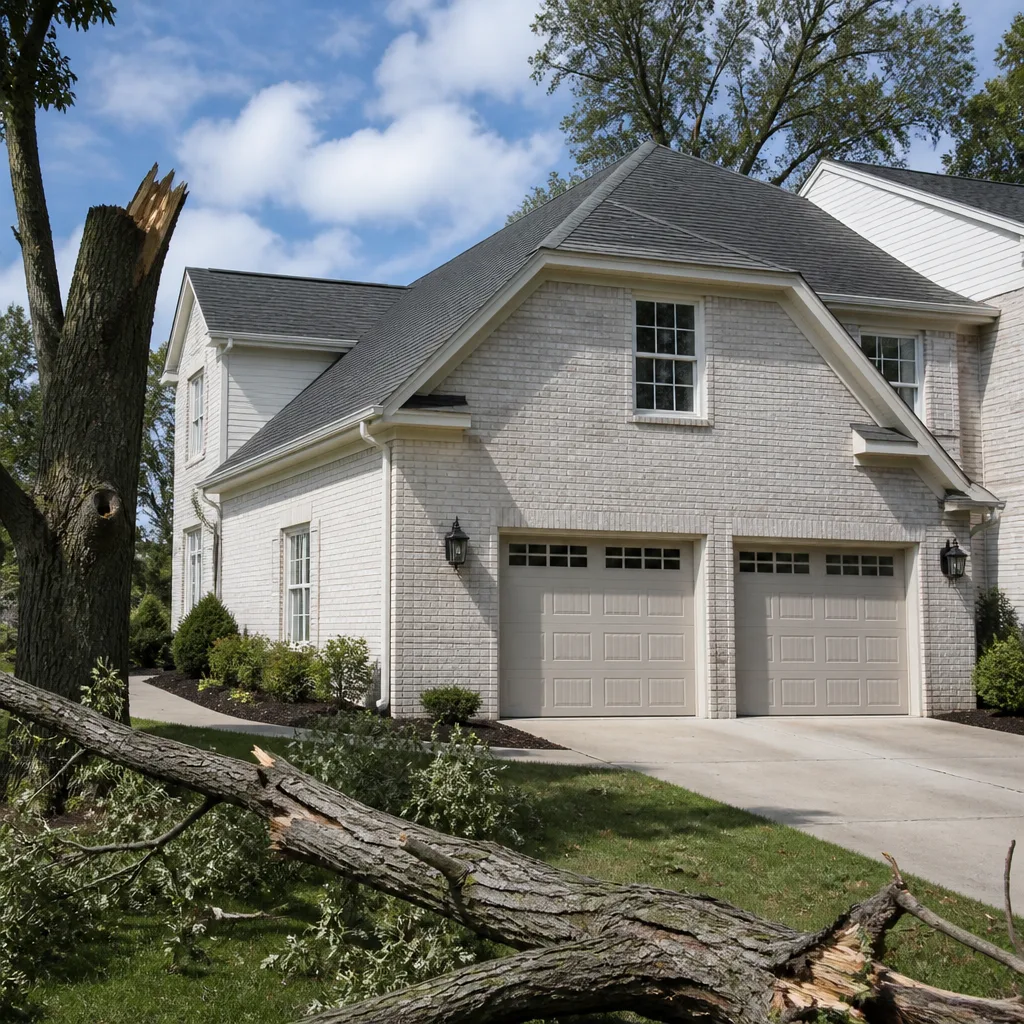
Wind-driven rain in Carlsbad’s winter storm pattern exploits vulnerabilities that are invisible from the ground. Displaced or broken roof tiles, especially at hips and ridges where wind uplift concentrates, create entry points that may not leak immediately if the underlayment remains intact. The warning sign is debris in the yard that indicates tile displacement, or a visual inspection from a ladder showing exposed underlayment or broken tile edges.
We recommend against homeowner roof access; the slope and height create genuine fall risk. Instead, use binoculars from the ground, or hire a roofing contractor for annual inspection. Document their findings with photos, and if storm damage is suspected, Fire & Smoke Damage Restoration in Carlsbad includes structural assessment coordination as part of our documented response protocol.
Common Mistakes to Avoid
- Trusting a single moisture reading. One elevated number is a data point; three readings showing a trend is a diagnosis. Carlsbad’s morning marine layer can temporarily spike surface moisture on exterior walls, creating false positives that resolve by midday.
- Assuming new construction is dry. We regularly find elevated moisture in Carlsbad homes built during the 2020-2023 construction surge, where accelerated schedules meant framing was enclosed before reaching equilibrium moisture content. New does not mean dry.
- Ignoring the garage. Attached garages in Carlsbad share wall assemblies with conditioned space, and slab moisture, water heater leaks, or stored chemical spills create vapor drive into living areas. The garage is not outside; it’s an extension of the building envelope.
- Photographing without scale or date. A close-up of mold or staining without a ruler, coin, or dated reference is inadmissible in most claim disputes. The photo that wins documentation is the photo that proves when and how large.
- Waiting for visible damage before calling. By the time drywall stains appear, the damage behind it has typically progressed through insulation, framing, and potentially into structural elements. The $200 call at 16% moisture prevents the $20,000 restoration at 35%.
- Using bleach on mold. Bleach evaporates faster than it penetrates, leaving moisture that feeds deeper colonization while the surface appears clean. It also destroys the documentation value of the visible growth for professional assessment.
- Neglecting to verify contractor documentation. Any restoration company can claim photo records and written scopes. Request samples: a redacted drying log, a sample scope format, proof of direct adjuster coordination. At DryMark Restoration Carlsbad, we provide these on request because documentation is the product, not an afterthought.
When to Call a Professional
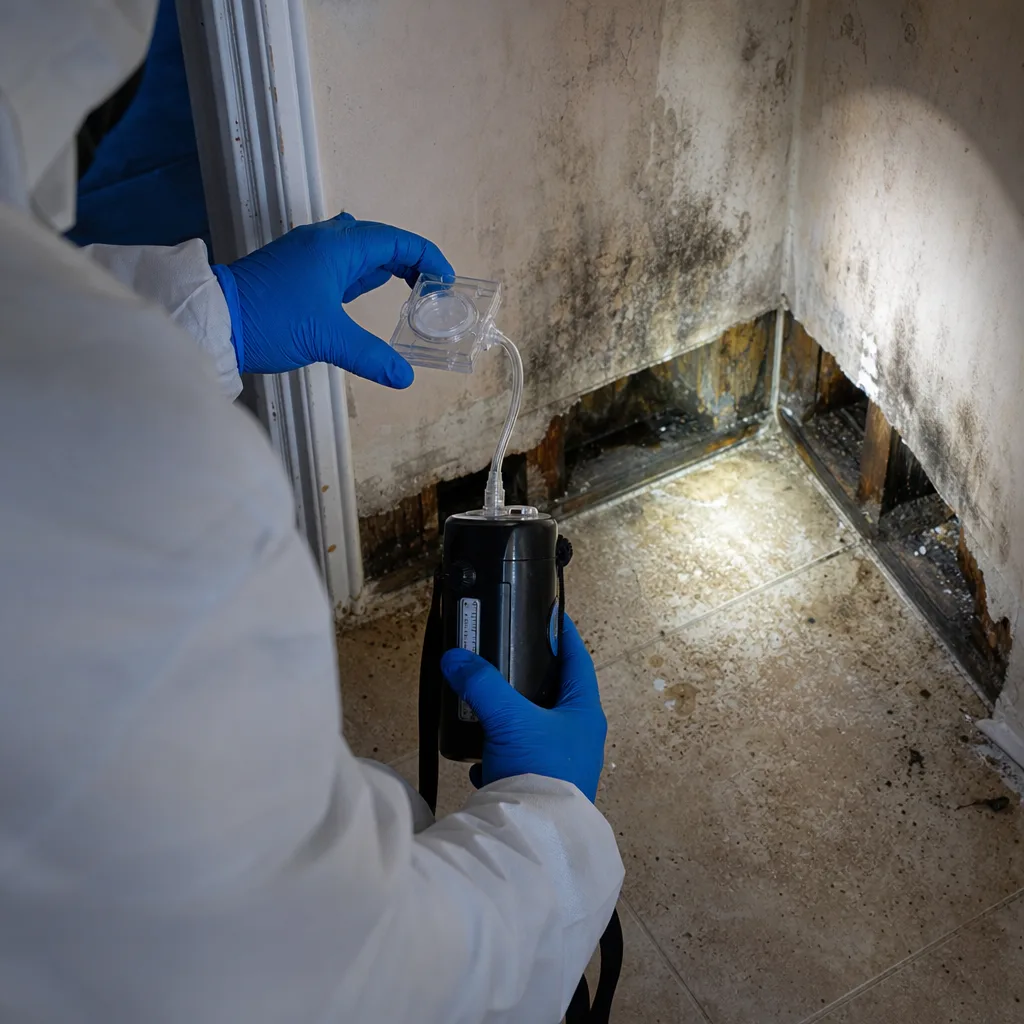
Call when a moisture trend is established and rising, not when damage is visible. Specifically: when two consecutive readings at the same location show increasing moisture content, when you detect musty odor that persists after ventilation, when your two-morning condensation test indicates active intrusion, or when any HVAC or plumbing component shows corrosion, staining, or unexplained moisture. These are the thresholds where homeowner detection ends and professional documentation begins.
DryMark Restoration Carlsbad offers free estimates in Carlsbad. Every estimate includes moisture mapping, a documented photo record, and a written price before any work begins, per Haven Standard, Clause 1. Our live phone coverage means no voicemail trees when you’re documenting an active leak. Call (858) 923-4372.
Frequently Asked Questions
A pinless moisture meter with adjustable depth sensitivity, suitable for homeowner use on drywall, wood, and masonry, typically costs $35-$75 from hardware retailers. Look for models that display percentage readings rather than arbitrary scales, and that include a reference chart for common building materials. For occasional use, this is sufficient; for properties with ongoing moisture management concerns, a pin-type meter with insulated deep probes adds diagnostic precision for about $50 more.
Wash the affected area with a stiff brush and water, then photograph it with a date stamp. Re-inspect after 72 hours of normal weather. Active efflorescence reappears because the moisture source continues delivering dissolved salts; historical efflorescence remains clean because the water movement has stopped. In Carlsbad’s coastal climate, even historical efflorescence may reactivate during extended marine layer periods, so seasonal re-checking is prudent.
Coverage depends on policy language regarding reasonable mitigation duties, not on whether you detected the warning sign. Most policies require the homeowner to take reasonable steps to prevent further damage once a condition is known. Your photo record actually supports your claim by establishing when the damage became apparent and what steps you took. The greater risk is undocumented damage where the insurer disputes whether the loss was sudden or gradual. Call (858) 923-4372 for a free second opinion on any written estimate, including scope questions that affect coverage.
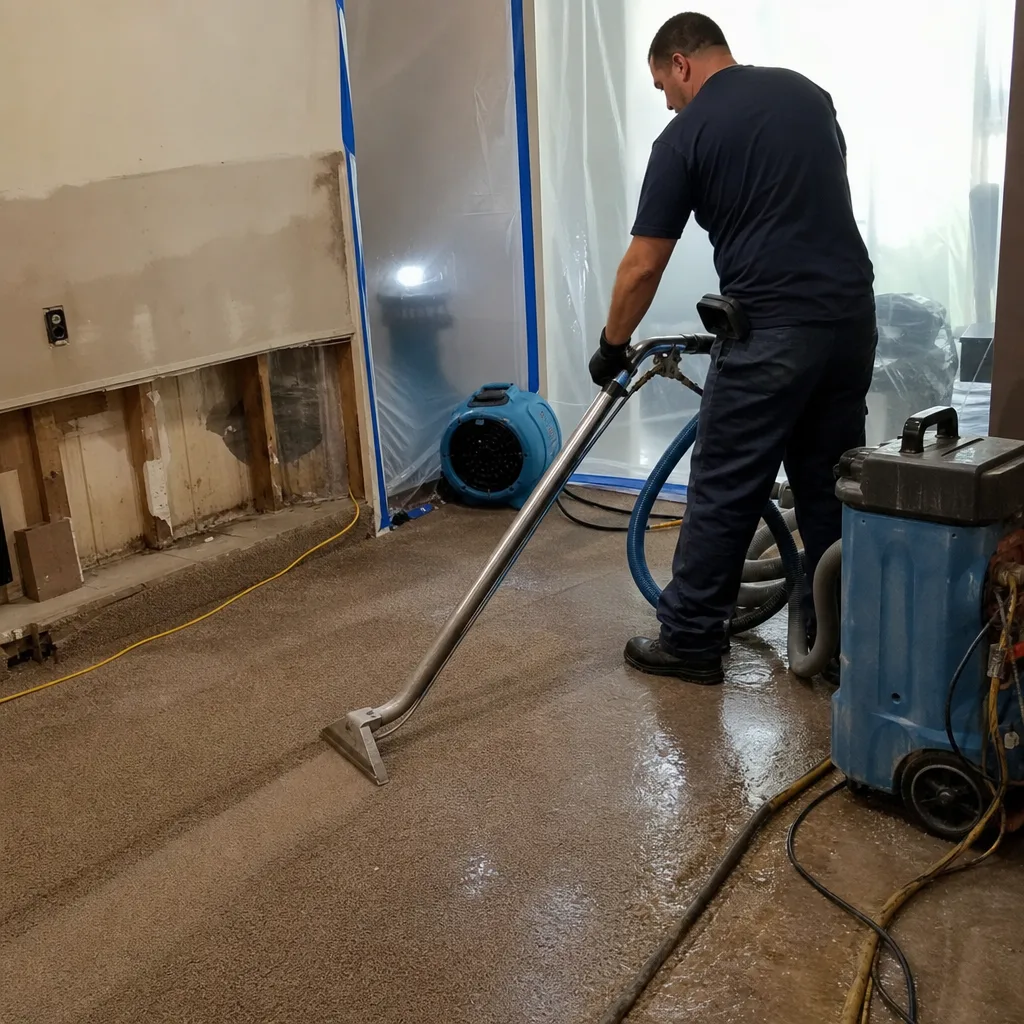
Our live phone coverage is available 24 hours a day, 7 days a week with no voicemail on emergency lines. For active water damage mitigation, we deploy documented photo assessment and moisture mapping on the initial visit, with professional-grade drying systems from Dri-Eaz, Phoenix, and XPOWER positioned based on the written scope developed on-site. Reconstruction and rebuild services are scoped, scheduled, and priced in writing like any remodel, not dispatched as emergency response.
Visible growth on a non-porous surface, smaller than 10 square feet, with no associated moisture damage or HVAC contamination, can sometimes be addressed with appropriate cleaning and source removal. However, the determination requires knowing the full extent, which is rarely visible. We provide documented moisture mapping and air sampling to establish whether growth is surface-only or has colonized hidden cavities. The Haven Standard requires this documentation before any remediation scope is written, because remediation without source elimination is temporary.
At DryMark Restoration Carlsbad, we coordinate directly with your adjuster as part of our standard protocol. This includes providing our documented photo record, daily drying logs with psychrometric data, and the written scope that supports our invoice. Our documentation is formatted to IICRC, RIA, and IFA standards specifically to align with adjuster review requirements. You remain the policyholder and decision-maker; we handle the documentation burden that otherwise falls on you.
The Bottom Line
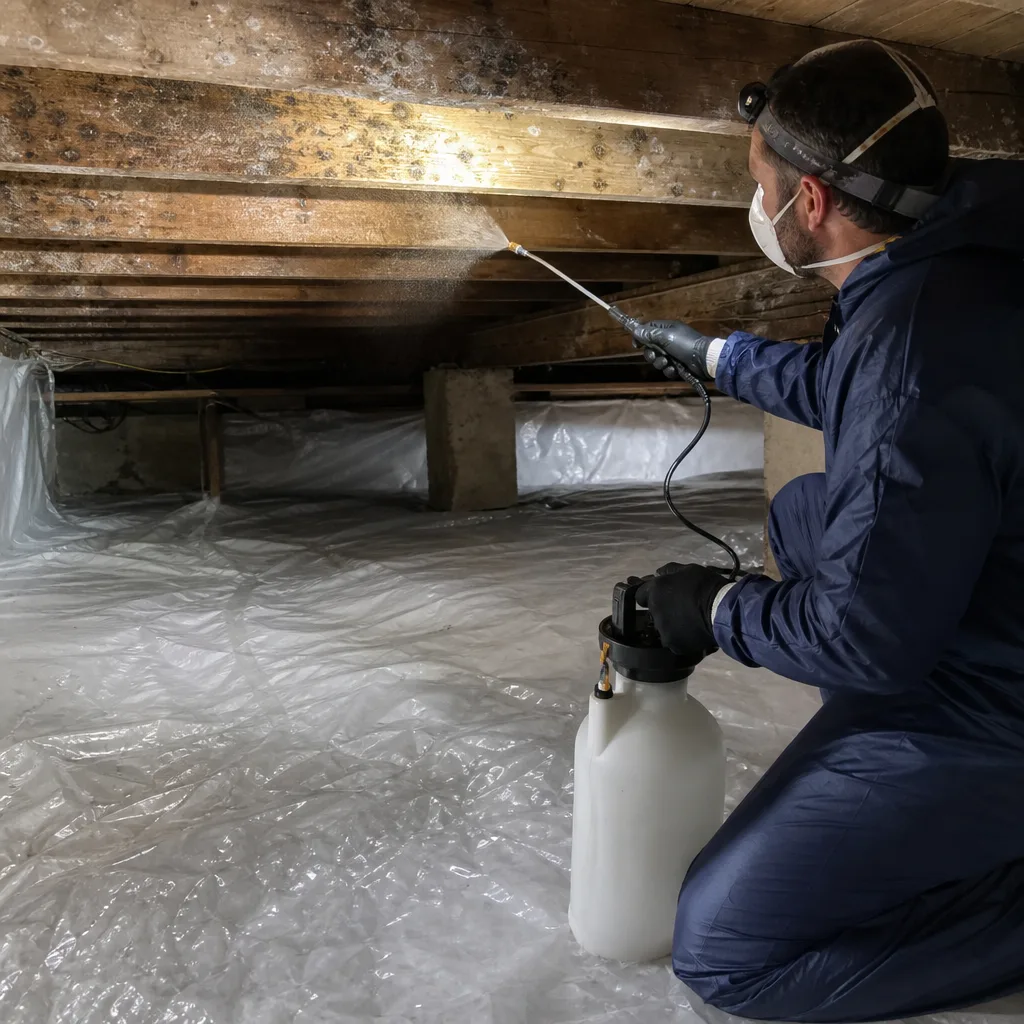
Damage restoration warning signs in Carlsbad homes are measurable before they are visible. A $40 moisture meter, a systematic photo habit, and the two-morning condensation protocol give homeowners the tools to detect problems at the $200 repair stage rather than the $20,000 restoration stage. The key outputs are numbers with context: moisture percentages, temperature differentials, dated images that establish trend and timeline. These are the same outputs that professional restoration companies document, and the homeowner who arrives with them already in hand has a claim that moves smoothly and a repair that stays proportionate. The alternative is waiting until the warning sign becomes unmistakable, which means it has already become expensive. Explore more guides & resources to protect your Carlsbad home before problems start.
Written by Alicia Brennan, Owner at DryMark Restoration Carlsbad, serving Carlsbad since 2011.