
Last updated September 23, 2026
Free visual inspection and a written scope of work before any mitigation begins - photos, moisture readings, and drying logs go in your claim file
The scope we write is the scope we bill. Anything new gets shown to you, in writing, before we touch it.
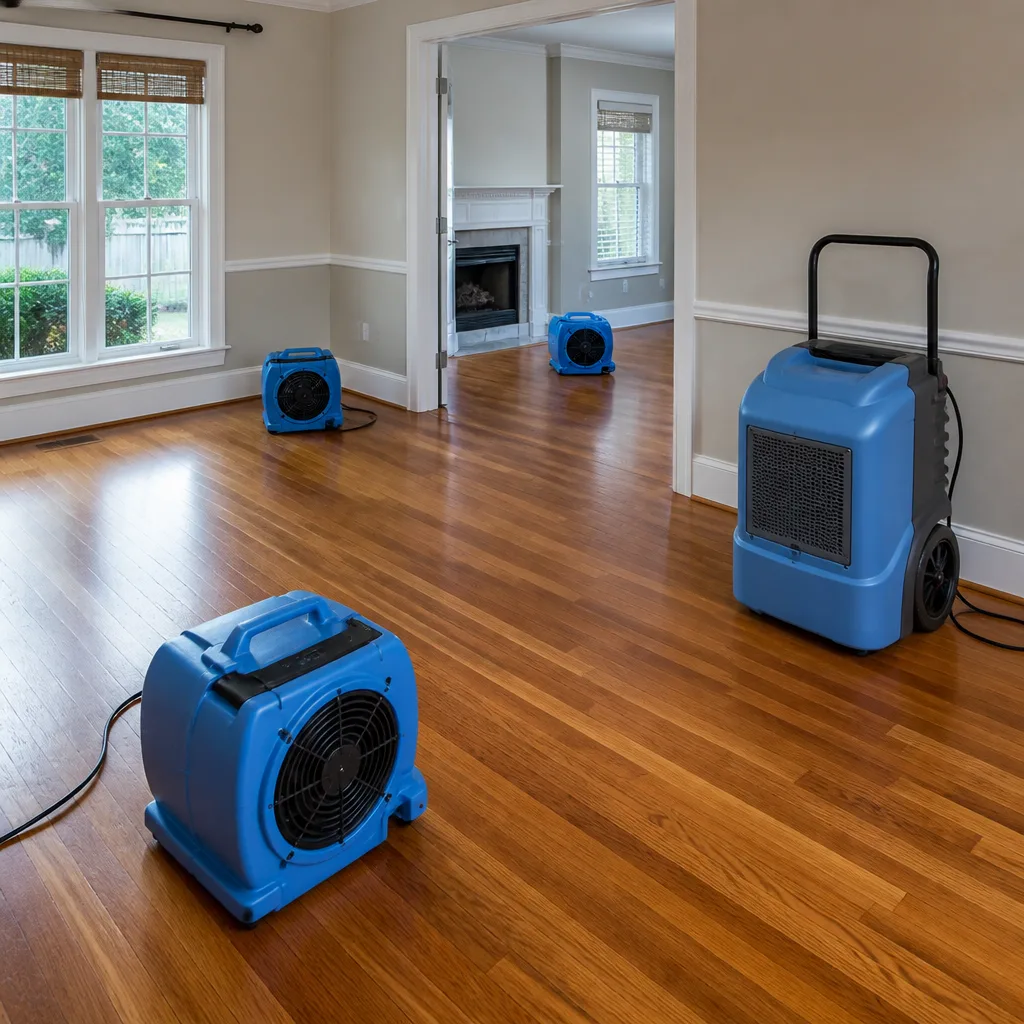

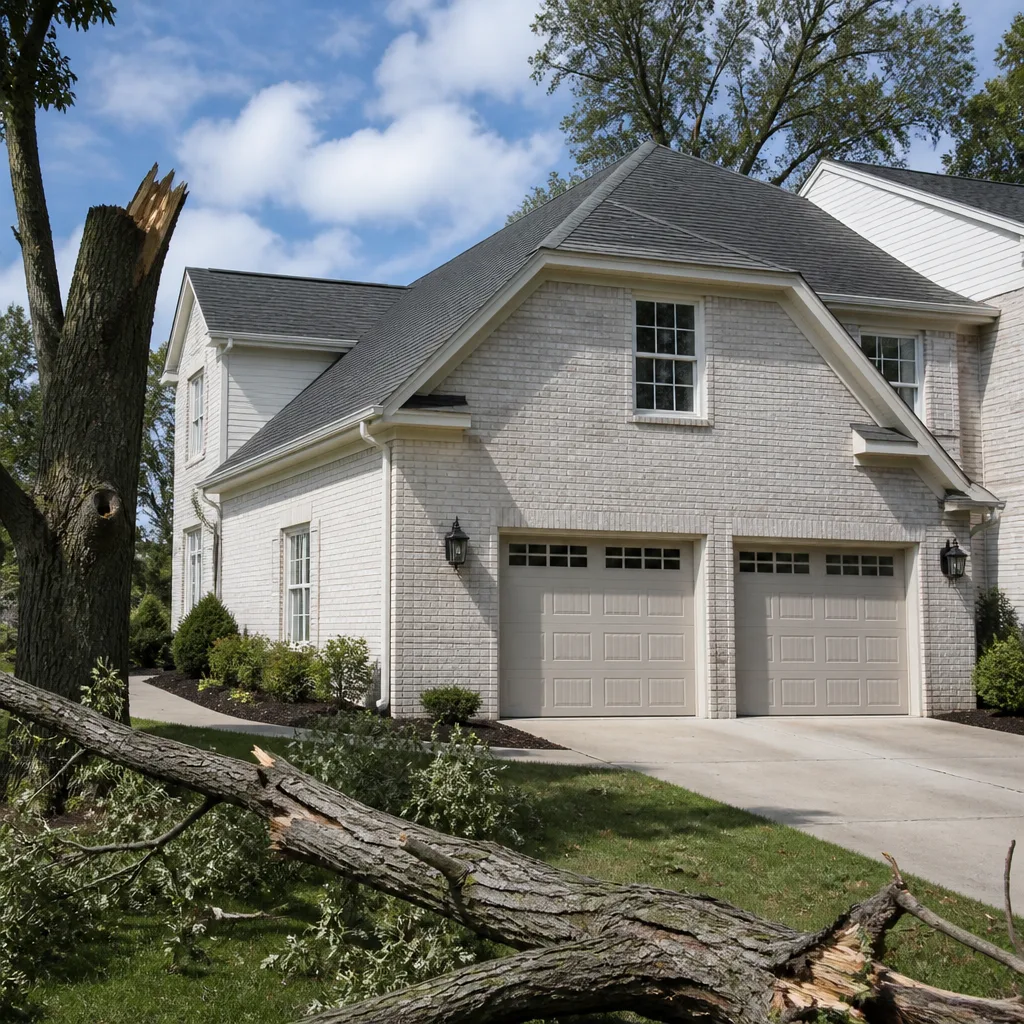

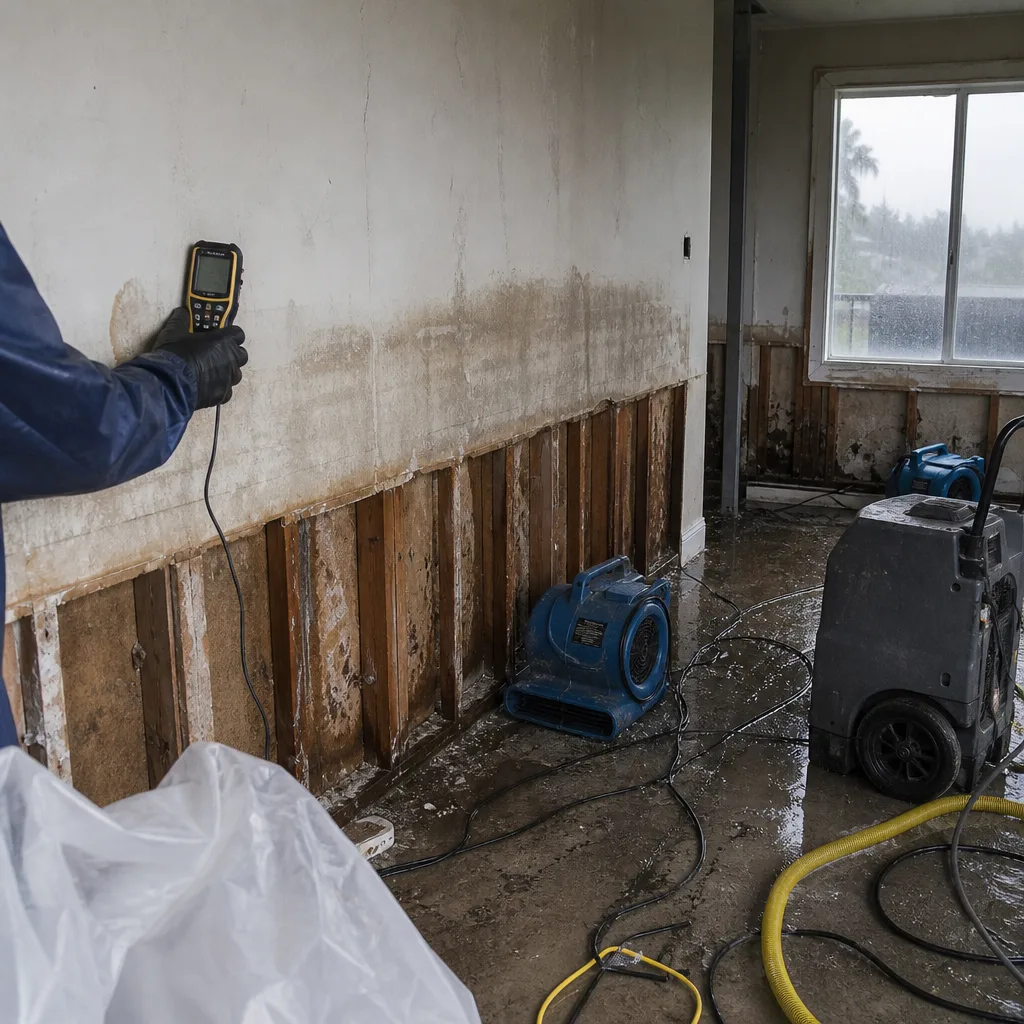 Before
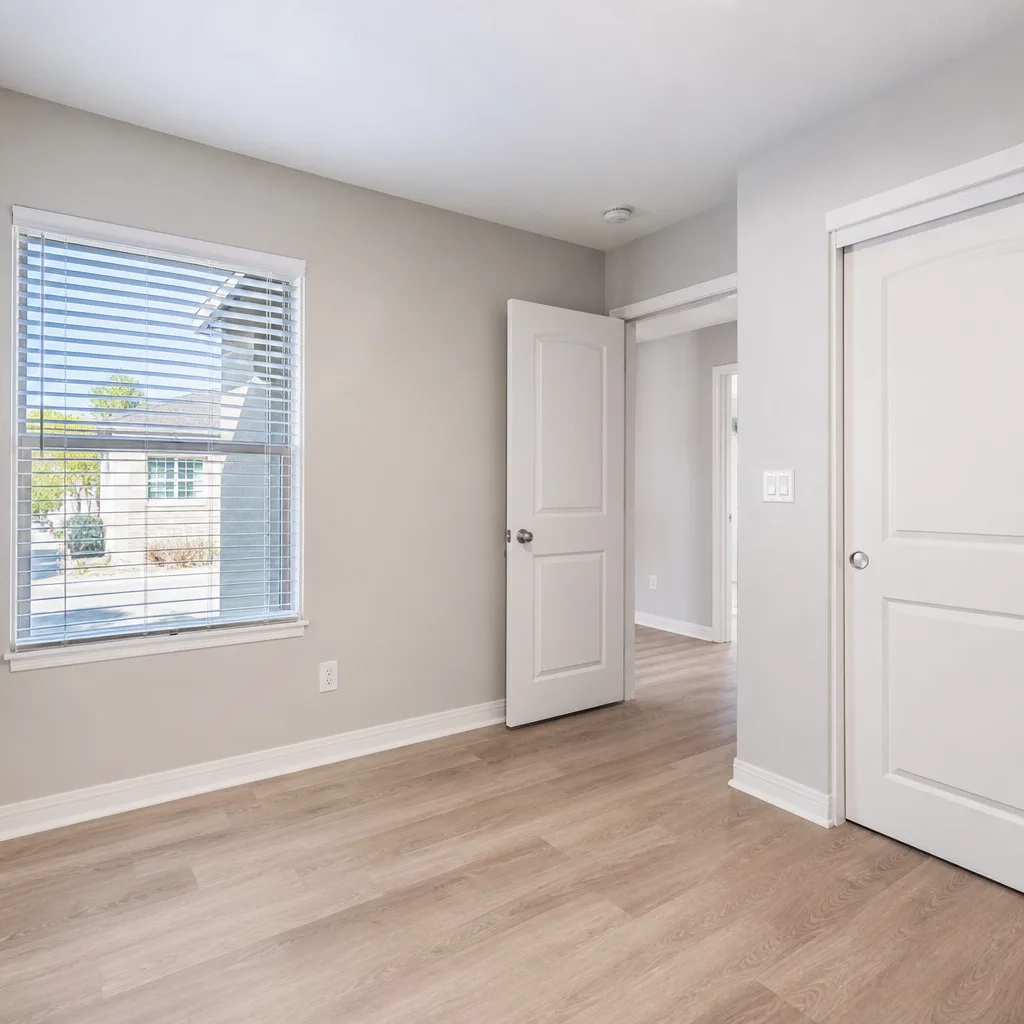 After
After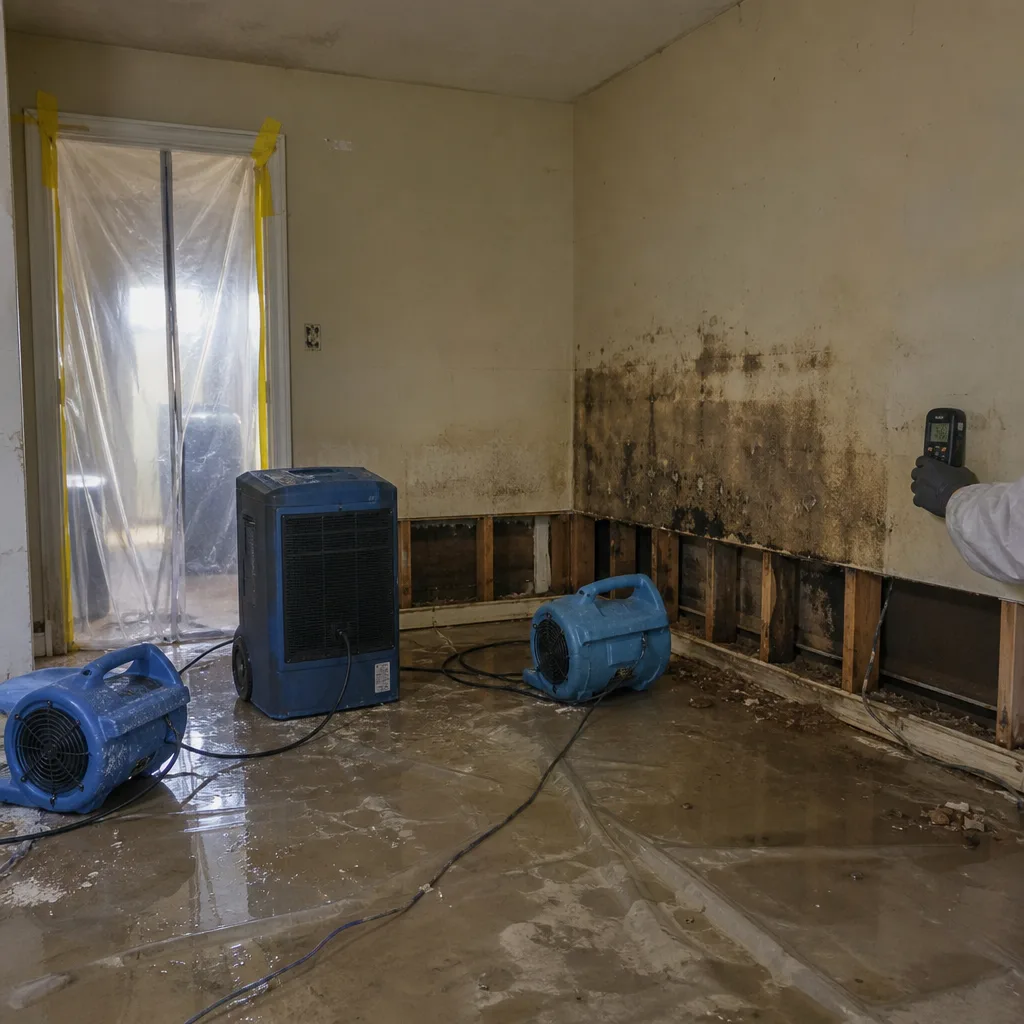 Before
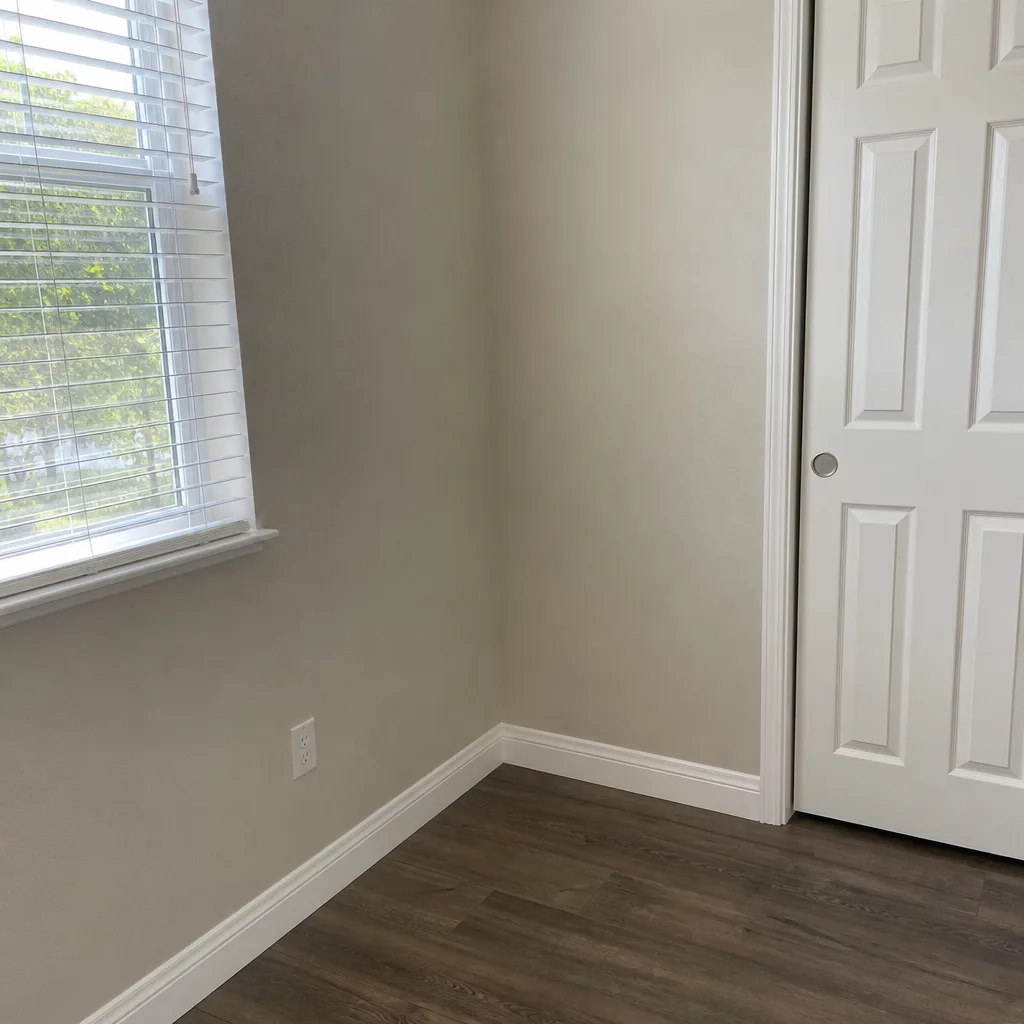 After
After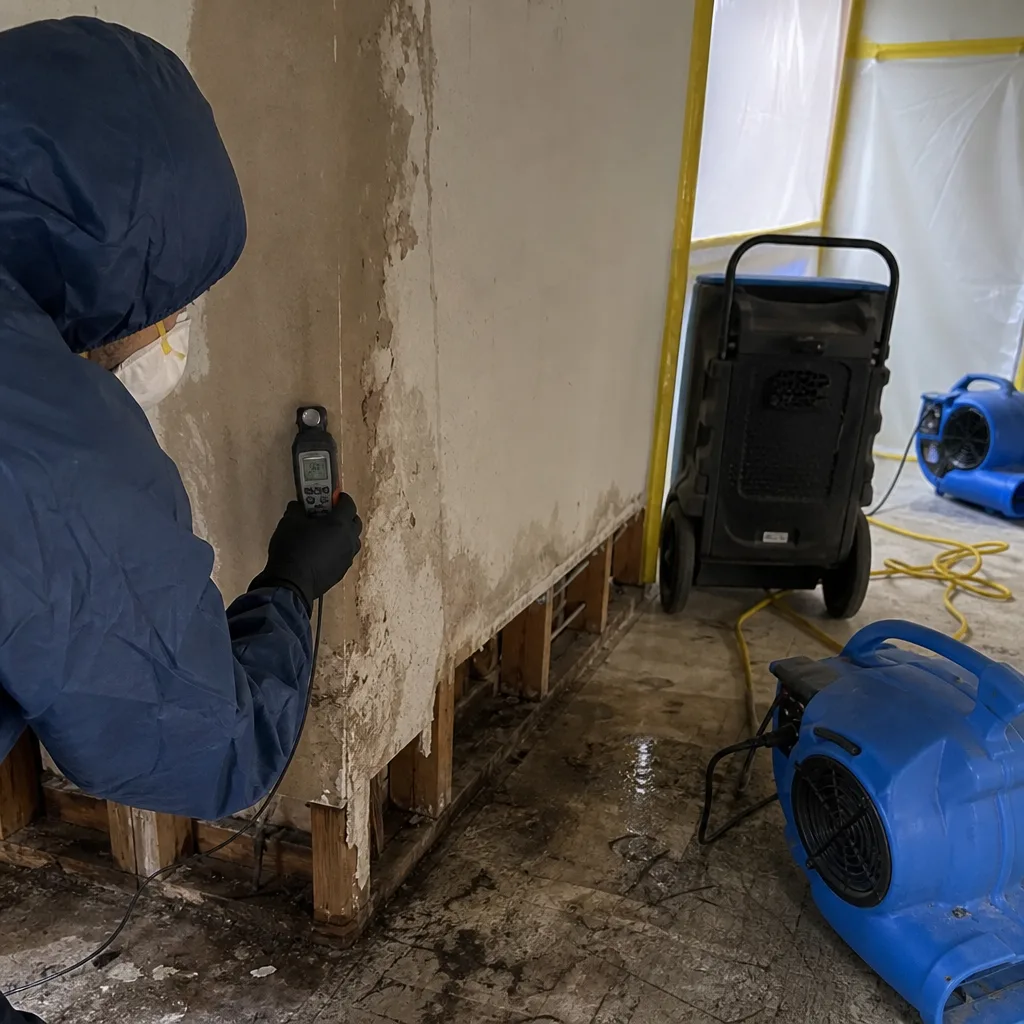 Before
 After
AfterDIY vs Professional Damage Restoration: The Carlsbad Homeowner’s Decision Guide
California courts have consistently held that a homeowner who performs their own restoration work bears the burden of proving the work met professional standards. A phone full of photos is not documentation. A dated, sequenced moisture log with equipment records is. In Carlsbad, where coastal humidity keeps structural moisture content elevated long after visible water disappears, the gap between what a homeowner can document and what an adjuster will pay for destroys more claims than the original damage itself. This guide shows you which restoration work you can legally and practically handle yourself, what documentation you must produce to preserve your insurance claim, and where California law requires a licensed professional regardless of your skill level. For more guidance, explore our How to Hire a Damage Restoration Contractor in Carlsbad: A Step-by-Step Guide.
Quick Answer
DIY damage restoration in Carlsbad is defensible for minor Category 1 water extraction under 10 square feet, superficial smoke odor removal, and cosmetic cleanup after a contained incident. For everything else, professional documentation, a written scope, and a moisture log are required to file a payable insurance claim. Unpermitted structural drying, mold remediation, or electrical and HVAC work triggers California contractor licensing requirements and voids most homeowners insurance coverage for that loss.
Table of Contents
- The Three Categories Where DIY Is Defensible in California
- The Four Categories Where DIY Creates Financial Exposure
- What Documentation You Must Produce to Preserve Your Insurance Claim
- How Carlsbad’s Coastal Humidity Complicates DIY Drying
- The Cost Math: Professional Documentation vs. Claim Denial
- Where California Law Requires a Licensed Contractor
- What Rental-Grade Equipment Actually Requires
- Common Mistakes to Avoid
- When to Call a Professional
- Frequently Asked Questions
- The Bottom Line
BeforeAfterThe Three Categories Where DIY Is Defensible in California
Not all damage requires a restoration firm. California law and standard homeowners policies recognize three limited scenarios where self-mitigation is legally defensible and financially rational.
1. Category 1 Water Extraction Under 10 Square Feet
Clean water from a broken supply line, overflowing sink, or failed ice maker, contained to under 10 square feet of affected materials, can be handled by a homeowner who produces proper documentation. The key constraints: the water must not have contacted insulation, wall cavities, or subflooring; the materials must be non-porous (tile, sealed vinyl, solid surface); and drying must complete within 24-48 hours to prevent microbial growth. In Carlsbad’s marine climate, that 24-48 hour window shrinks because ambient humidity often exceeds 70%, slowing evaporation even with aggressive air movement.
We’ve seen homeowners in the La Costa area successfully self-mitigate a dishwasher line failure on a sealed concrete floor by extracting standing water, deploying four air movers and a dehumidifier with documented hourly psychrometric readings, and producing a drying log that showed moisture content returned to baseline within 36 hours. Their insurer paid the equipment rental and their time at a reasonable hourly rate because the documentation met the standard.
2. Superficial Smoke Odor Removal After Contained Incidents
A kitchen fire extinguished quickly, with no structural damage and no smoke penetration into wall cavities or HVAC systems, can be addressed with surface cleaning, ozone treatment of soft goods, and sealed repaint. The boundary: if smoke entered the return air plenum or left residue on framing members, professional remediation is required to document that odor sources were eliminated rather than masked. California adjusters are trained to deny supplemental claims for recurring smoke odor when the initial mitigation was self-performed without air sampling or particle testing.
3. Cosmetic Cleanup After Contained Biohazard Incidents
A minor blood spill on a hard surface, contained and without seepage into porous materials, can be cleaned by a homeowner following OSHA guidelines for universal precautions. The threshold is strict: no porous material contamination, no needle or sharp object involvement, and no incident requiring law enforcement notification. Most homeowners never encounter this scenario, but it exists in the regulations. Documentation requires photographic evidence of the initial condition, the cleaning process, and post-cleanup ATP testing or equivalent verification.
What unites these three categories is not the simplicity of the work. It is the limited scope of potential hidden damage and the homeowner’s ability to produce documentation that satisfies an adjuster’s standard of proof. Most Carlsbad homeowners who attempt DIY restoration fail not on the work itself but on the paperwork that makes the work payable.
The Four Categories Where DIY Creates Financial Exposure
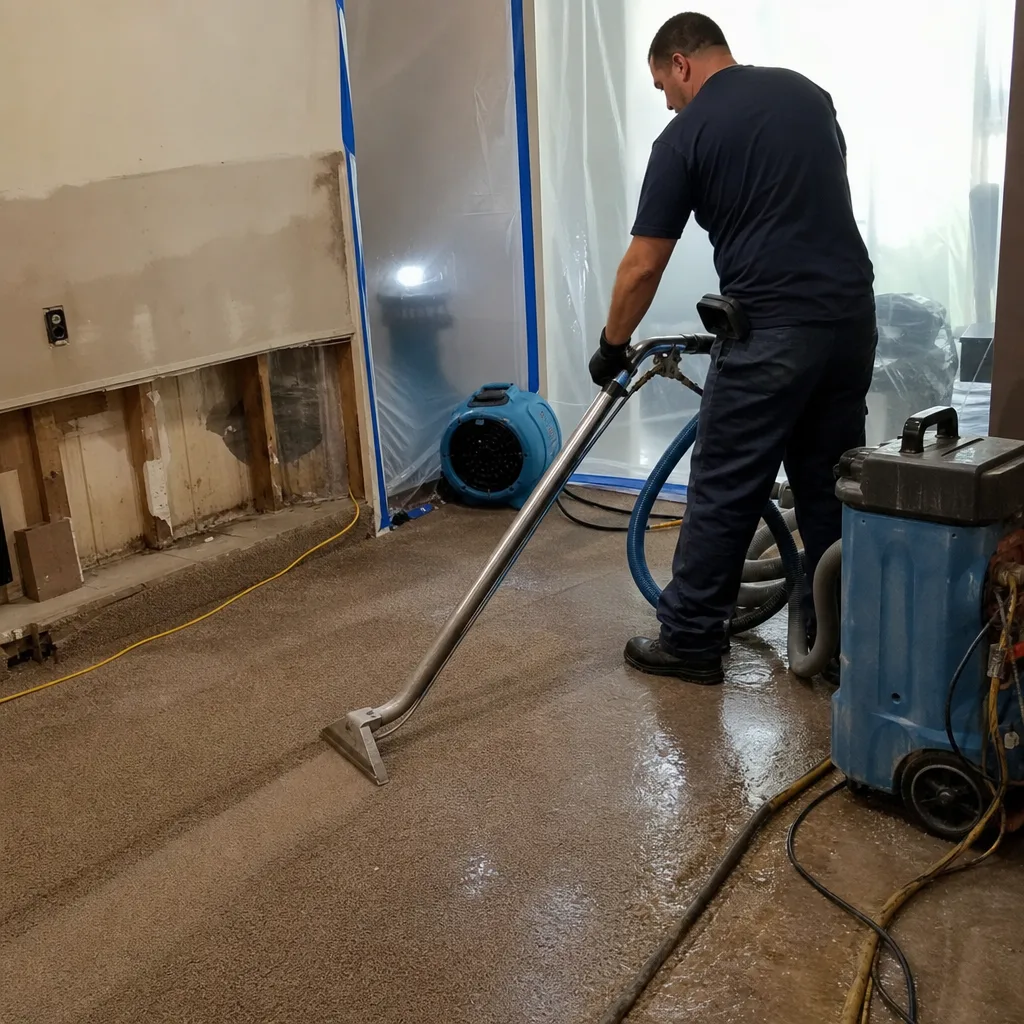
These are the scenarios where self-mitigation exposes Carlsbad homeowners to claim reduction, claim denial, or direct legal liability.
1. Category 2 or 3 Water Damage
Gray water (dishwasher discharge, washing machine overflow) and black water (sewage backup, seawater intrusion, rising groundwater) carry microbial and chemical contaminants that require documented sanitization protocols. IICRC S500 standards specify cleaning agents, contact times, and post-treatment verification testing. A homeowner who self-cleans a sewage backup in a Bressi Ranch townhome without producing a contamination log and clearance sampling has no defensible claim for any subsequent health issue or structural decay. Worse, their insurer may deny the entire loss for failure to mitigate properly, citing the policyholder’s duty to prevent further damage.
2. Mold Remediation Exceeding 10 Square Feet
California’s Mold Remediation Act and the IICRC S520 standard require containment, negative air pressure, and post-remediation verification for any visible mold growth exceeding 10 contiguous square feet. A homeowner who removes a 12-square-foot patch of moldy drywall in a Carlsbad Village cottage without establishing containment and air scrubbing has performed unlicensed remediation. Their insurer can deny any claim related to that mold, and they assume liability for any cross-contamination or health effects. The Mold Remediation in Carlsbad page details the documentation requirements for payable mold claims.
3. Structural Drying Requiring Subfloor or Wall Cavity Access
Once water has reached plywood subflooring, OSB sheathing, or wall cavities, consumer-grade equipment cannot achieve the vapor pressure differential required to remove bound moisture. The drying standard is not “feels dry” or “looks dry.” It is a moisture content reading within 2-4% of the dry standard for that material, verified with a calibrated pin or pinless meter, documented daily until equilibrium. In Carlsbad, where morning marine layer fog reintroduces moisture through open windows, achieving and maintaining these readings without sealed dehumidification chambers is functionally impossible.
4. Fire & Smoke Damage With HVAC Involvement
Smoke that entered a central air system requires duct cleaning, filter replacement, and often coil decontamination documented with pre- and post-cleaning particle counts. A homeowner who wipes visible soot and runs the system has distributed acidic particulate throughout the home, causing corrosion of metal components and embedding odor in porous duct liner. The subsequent system failure is excluded as resulting from improper mitigation. The Fire & Smoke Damage Restoration in Carlsbad page covers the full documentation protocol for HVAC-involved losses.
What Documentation You Must Produce to Preserve Your Insurance Claim
California insurance regulations and standard policy language place the burden of proof on the policyholder. A claim without documentation is a claim without payment. Here is what adjusters expect, in the format they expect it.
The Four Required Documents
- Dated, Sequenced Photo Record: Every photo must include a timestamp, room identifier, and directional indicator (facing north, facing window, etc.). Photos must show the full room, then close-ups of each affected material, then the same angles after each phase of work. A phone’s automatic geotag and timestamp are insufficient; the standard is a photo log with written descriptions.
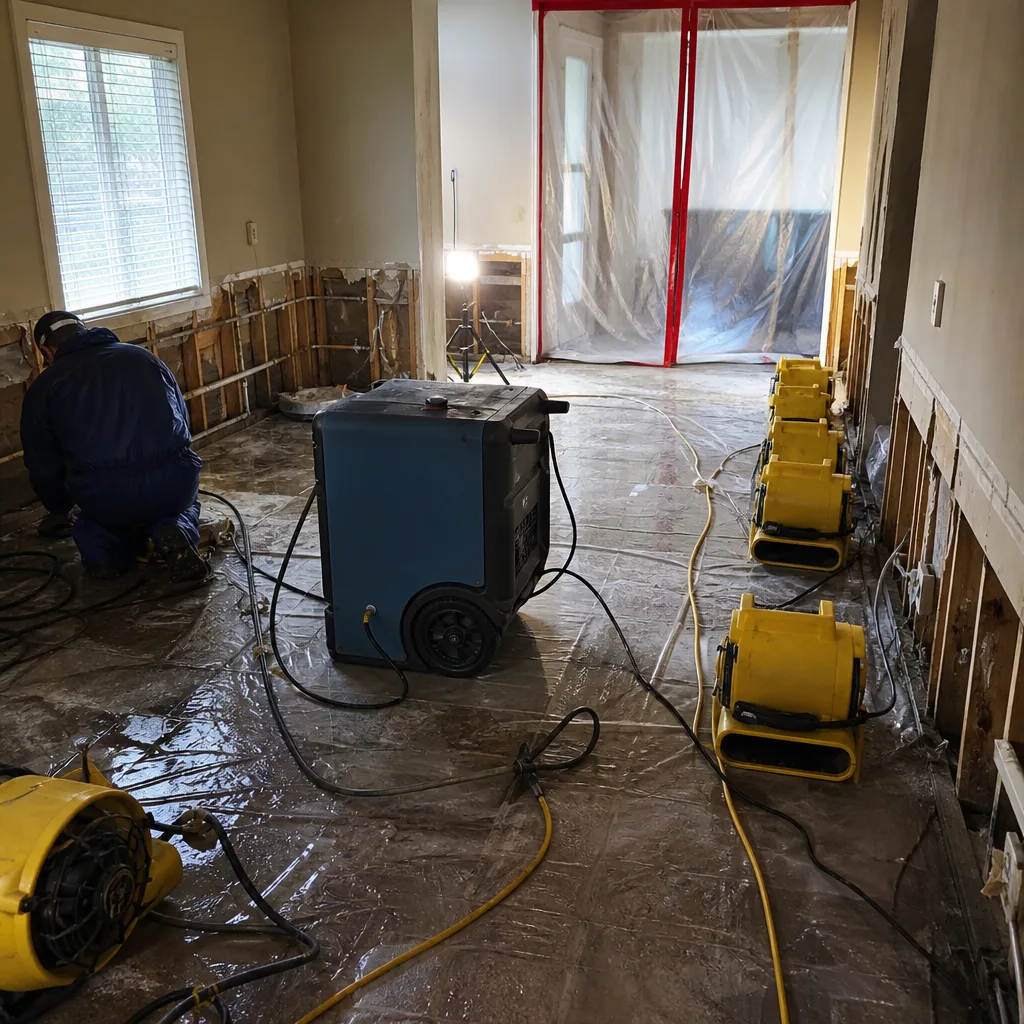
- Daily Moisture Log: For every affected room, document: date and time, ambient temperature and relative humidity, specific humidity grains per pound, moisture content percentage for each affected material, equipment deployed (make, model, serial number), and readings from unaffected control areas for baseline comparison. Psychrometric data, which is the measurement of air and moisture relationships that predict drying progress, must show a downward trend in moisture content and a stable or decreasing specific humidity.
- Written Scope of Work: Before any work begins, a line-item description of every action to be taken, with quantities (square feet, linear feet, cubic feet), unit prices, and total prices. This is Haven Standard, Clause 1: written price before work begins. A homeowner performing DIY work should produce their own scope, even if the price is zero for labor, to demonstrate that the work was planned and measured rather than improvised.
- Equipment Record: For every dehumidifier, air mover, heater, or air scrubber, record: manufacturer and model, serial number, date placed, date retrieved, daily runtime hours, and maintenance verification (filters clean, coils clear, drain lines clear). This proves the equipment was capable of performing the work claimed.
In our experience with over 12,000 homes restored since 2011, the claims that pay without dispute are the ones where the documentation could be handed to another restoration professional, who could reconstruct exactly what was done, when, and with what result. A claim supported by photos alone, or by a narrative description without measured data, receives scrutiny, delay, and often reduction.
How Carlsbad’s Coastal Humidity Complicates DIY Drying
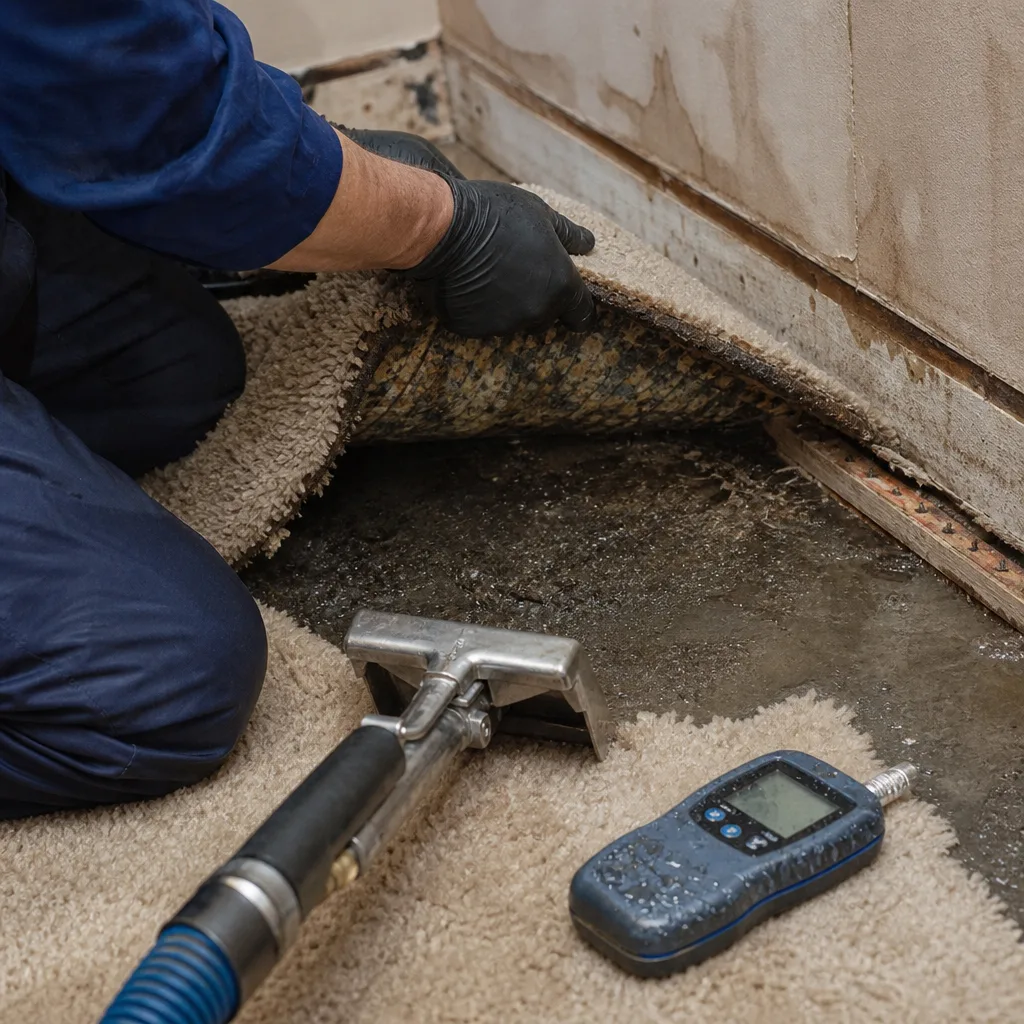
Carlsbad’s location between the Pacific Ocean and the coastal ridge creates a microclimate that directly conflicts with effective structural drying. Understanding this is essential to evaluating whether DIY is feasible, as covered in our Seasonal Damage Restoration Care for Carlsbad: Year-Round Homeowner’s Guide.
The marine layer, which rolls inland on many nights and mornings from May through August, maintains relative humidity above 75% for extended periods. Consumer-grade fans, even high-velocity models, move air but do not remove moisture from it. They accelerate surface evaporation, but in humid conditions, the evaporated moisture re-condenses on cooler surfaces or simply raises the ambient humidity without achieving net moisture removal. Professional drying requires dehumidification that achieves a specific humidity low enough to create vapor pressure differential, the force that drives moisture from wet materials into the drier air.
Carlsbad’s soil composition, with high clay content in areas like the Robertson Ranch development, also complicates slab-on-grade drying. Capillary rise from saturated soil can re-wet slab perimeters even after surface water is extracted. Without a thermal imaging camera to identify evaporative cooling at slab edges, a homeowner cannot detect this ongoing moisture source.
Rental-grade dehumidifiers available at hardware stores in Carlsbad typically achieve 50-70 pints per day at 80°F and 60% relative humidity, the AHAM test condition. But in actual Carlsbad conditions, 70°F and 75% relative humidity, their output drops by 30-40%. A professional LGR (low-grain refrigerant) dehumidifier from Phoenix or Dri-Eaz maintains rated output down to 40 grains per pound, the condition where consumer units become ineffective. Desiccant dehumidifiers, which use silica gel to adsorb moisture, are required for some Carlsbad crawl space and garage drying scenarios where temperatures fall below 65°F.
The practical result: a homeowner who rents two dehumidifiers and six air movers for a week may spend $800-1,200 on equipment that cannot achieve the drying standard, while accumulating no documentation that would justify that expense to an insurer. The same investment in professional service, with documented results, produces a payable claim and a warranted outcome.
The Cost Math: Professional Documentation vs. Claim Denial
The financial comparison between DIY and professional restoration is not equipment rental versus service invoice. It is the net recovery after claim adjustment, including the value of your time, the risk of claim denial, and the cost of correcting failed mitigation.
Scenario: Supply Line Failure in a Carlsbad Single-Family Home
A washing machine supply line fails while the homeowner is at work. Water affects 400 square feet of engineered hardwood, drywall to 4 inches, and insulation in one exterior wall. The homeowner discovers the damage at 6 PM.
DIY Path:
- Emergency extraction with wet/dry vacuum: 4 hours
- Equipment rental (2 dehumidifiers, 6 air movers, 1 air scrubber): $1,100 for 7 days
- Moisture meter rental: $85
- Time monitoring and documenting drying: 14 hours over 7 days
- Replacement of 120 sq ft engineered hardwood and 32 sq ft drywall: $2,400 materials, 40 hours labor
- No documentation accepted by adjuster; claim reduced to 40% of documented professional estimate
- Result: $8,200 out-of-pocket after partial claim payment, plus 58 hours of homeowner labor
Professional Path with Documentation:
- Emergency response and extraction: $1,800
- Structural drying with LGR dehumidifiers and Injectidry hardwood floor drying system: $3,200
- Daily moisture logs, photo record, written scope: included
- Replacement of unsalvageable materials with line-item pricing: $2,800
- Full claim payment with no dispute: $7,800 covered, $0 out-of-pocket after deductible
- Homeowner time: 4 hours (initial call, scope review, final walkthrough)
- 365-Day Done Right Promise covers any recurrence
The DIY path in this scenario costs more, takes longer, and leaves the homeowner with no recourse if mold develops in the wall cavity six months later. The professional path, documented to IICRC and RIA standards, produces full recovery and a transferable warranty.
In Carlsbad’s insurance market, where coastal exposure already triggers higher premiums and stricter claim review, adjusters are particularly vigilant for self-performed mitigation that lacks professional documentation. The savings from skipping professional service are typically erased by claim reduction and the homeowner’s uncompensated time.
Where California Law Requires a Licensed Contractor
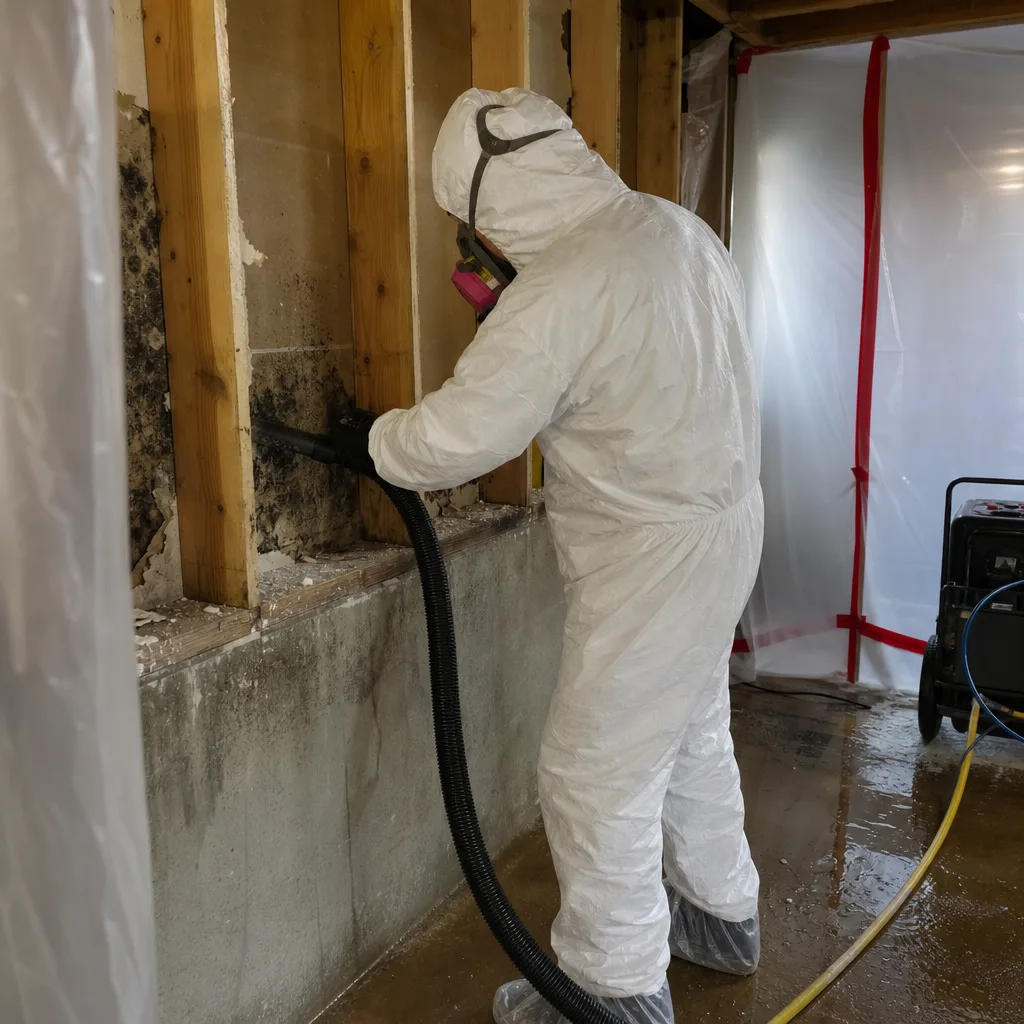
California contractor licensing law creates hard boundaries that override the DIY question entirely. Performing work without required licensing voids insurance coverage and exposes the homeowner to civil liability and state enforcement action.
Drywall Removal and Structural Repair: C-21 or B License Required
Any work that involves removal of load-bearing drywall, repair of structural elements, or reconstruction of fire, water, or mold-damaged framing requires a C-21 Building Moving/Demolition contractor or B General Building Contractor. In Carlsbad, where many homes built in the 1970s and 1980s have asbestos-containing drywall joint compound, removal of more than minor quantities triggers additional Cal/OSHA notification requirements. A homeowner who removes 100 square feet of asbestos-containing drywall without proper notification and abatement faces fines starting at $7,500 per day.
Mold Remediation: C-61/D-49 or Certified Remediation Firm
While California does not have a standalone mold remediation contractor license, the C-61 Limited Specialty classification with D-49 Sanitation System designation is the appropriate license for mold remediation work. More critically, the IICRC S520 standard and most insurance policies require remediation to be performed by a firm with certified technicians. A homeowner performing their own mold remediation above 10 square feet has no defensible certification to cite.
HVAC Work: C-20 License Required
Any work on heating, ventilation, or air conditioning systems, including duct cleaning after smoke or mold contamination, requires a C-20 Warm-Air Heating, Ventilating and Air-Conditioning contractor. This includes connecting drying equipment to HVAC systems for accelerated drying, a technique sometimes attempted by DIYers. Unlicensed HVAC work is a misdemeanor in California and voids homeowner’s insurance for any resulting damage.
Electrical Work: C-10 License Required
Water damage to electrical panels, outlets, or wiring requires evaluation and repair by a C-10 Electrical contractor. A homeowner who resets a tripped breaker after water exposure and causes a fire has committed unlicensed electrical work; their insurer will deny the fire claim as resulting from illegal activity.
The Water Damage Restoration in Carlsbad page includes additional detail on the licensing requirements for water-damaged electrical and HVAC systems.
What Rental-Grade Equipment Actually Requires
Homeowners who pursue DIY restoration often believe that renting professional-looking equipment produces professional results. The gap between rental equipment and professional deployment is wider than the equipment itself.
A standard LGR dehumidifier from B-Air or XPOWER, available at some rental depots, requires: correct sizing based on affected cubic footage and class of water loss; placement to create optimal airflow patterns; monitoring of grain depression (the difference between incoming and outgoing air moisture content) to verify performance; and maintenance of condensate drainage that does not create secondary damage. A homeowner who places a dehumidifier in a closed room without air movers has created a stagnant, humid chamber that promotes mold growth rather than drying.
Air movers require placement at specific angles to walls and floors to create laminar airflow across wet surfaces. The standard is one air mover per 10-16 linear feet of wall, with additional units for cabinets, closets, and other restricted spaces. Injectidry systems, which use negative air pressure to dry inside wall cavities and under hardwood flooring, require training to avoid creating pressure imbalances that draw contamination into clean areas.
Most critically, rental equipment does not come with the psychrometric monitoring tools, the training to interpret readings, or the documentation protocols that make the work defensible. The equipment is capable of professional results only in professional hands with professional measurement and record-keeping.
Common Mistakes to Avoid
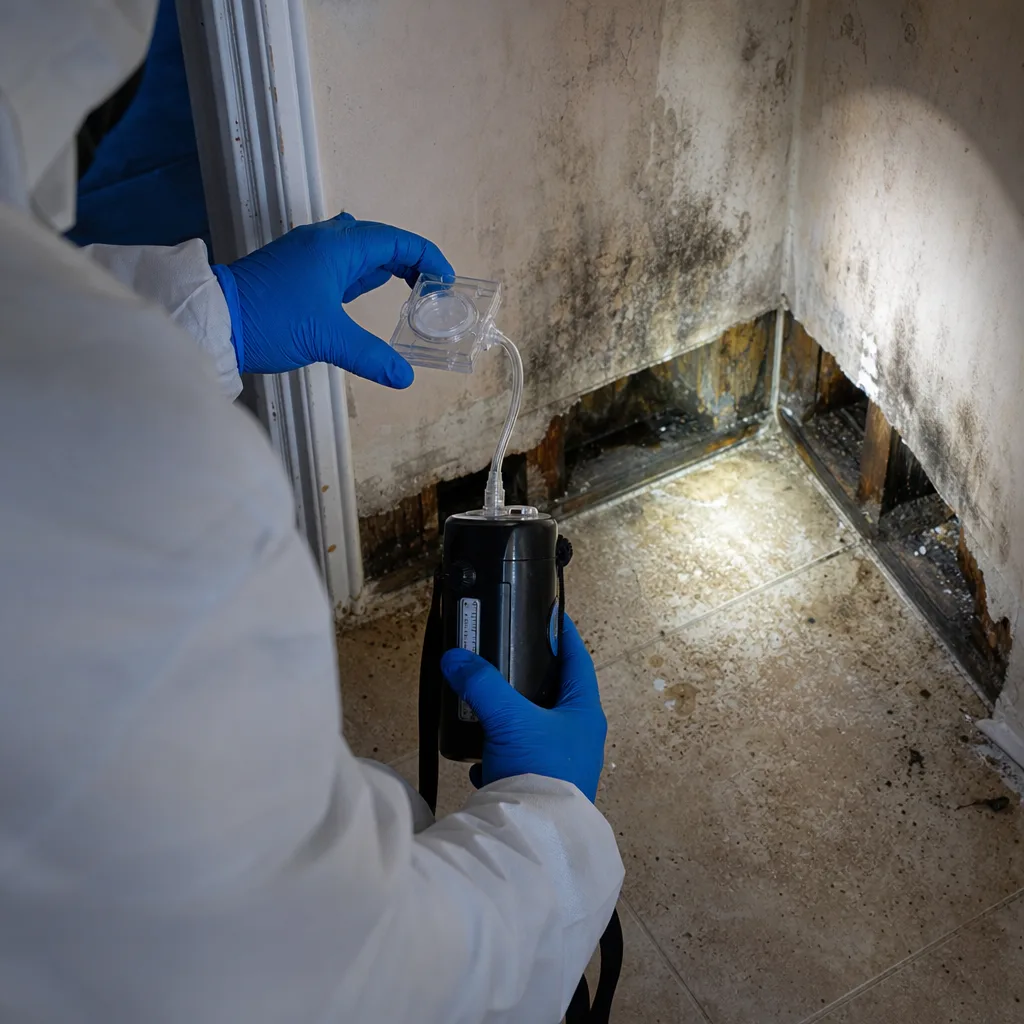
- Using bleach on mold. Bleach evaporates faster than it penetrates porous materials, leaving moisture that feeds deeper mold growth. In Carlsbad’s humid climate, this accelerates rather than resolves the problem. Professional remediation uses EPA-registered antimicrobial agents with documented dwell times.
- Drying only what you can see. Water follows gravity and capillary action through wall cavities, under flooring, and into insulation. A moisture meter reading on the surface of drywall tells you nothing about the moisture content of the paper backing or the cavity behind it. Thermal imaging is required to find hidden moisture.
- Running HVAC during or after smoke damage. The first instinct, to clear air by running the system, distributes acidic soot particles throughout the duct network and onto clean surfaces. The system must be sealed and professionally cleaned before operation.
- Waiting for insurance approval before starting mitigation. Policies require prompt mitigation to prevent further damage. A homeowner who waits 72 hours for adjuster assignment, common in Carlsbad after regional storms, has likely allowed Category 1 water to become Category 2 or 3. Document everything, start immediately, and seek reimbursement.
- Accepting a contractor’s verbal estimate. Haven Standard, Clause 1 exists because verbal estimates become disputed invoices. A written scope with line-item pricing, signed before work begins, is the only protection against scope creep and the only documentation an adjuster will accept without challenge.
- Ignoring the 24-hour mold clock in coastal humidity. The standard 48-72 hour window for mold colonization shrinks in Carlsbad’s marine climate. A homeowner who extracts water but fails to achieve structural drying within 24 hours has likely initiated mold growth that requires professional remediation.
- Discarding damaged materials before photo documentation. Insurance requires evidence of loss. A carpet removed and discarded before photos, measurements, and sample retention has no recoverable value in the claim. Document first, remove second, with each action recorded.
When to Call a Professional
Call a professional when the damage exceeds 10 square feet, involves gray or black water, has reached wall cavities or subflooring, includes mold or odor, affects electrical or HVAC systems, or when you need a payable insurance claim. See our Water Damage Restoration Maintenance Checklist for Carlsbad Homeowners for proactive steps. In Carlsbad, where coastal humidity complicates every drying scenario, professional documentation is not an add-on. It is the difference between recovery and loss.
DryMark Restoration Carlsbad offers free estimates in Carlsbad. Every estimate is a written scope with line-item pricing delivered before any work begins, Haven Standard, Clause 1. We document every job with photo records, daily moisture logs, and equipment verification to IICRC, RIA, and IFA standards. Our 365-Day Done Right Promise, backed by The Haven Standard, means if it’s not done right, we make it right. Call (858) 923-4372 for a free estimate.
Frequently Asked Questions
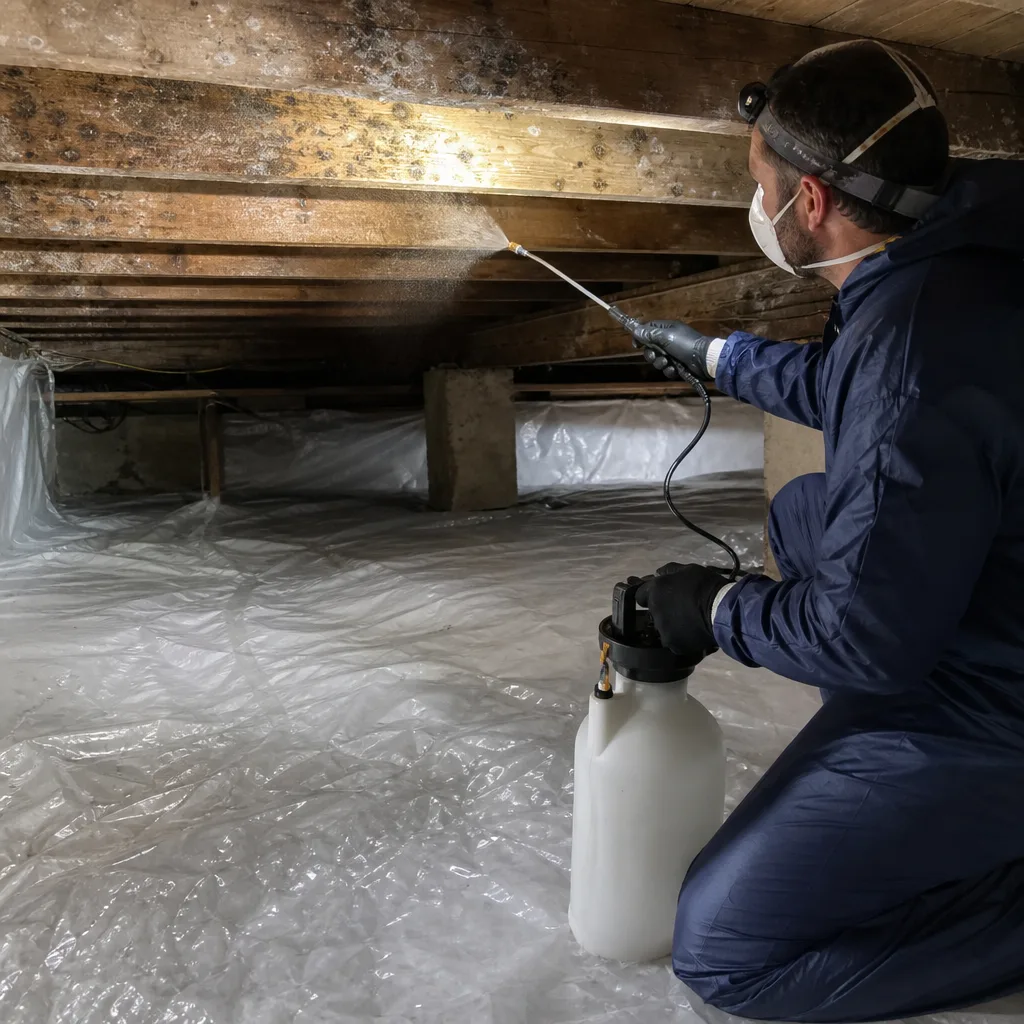
Sometimes, but only if you produce documentation equivalent to professional standards: dated photo sequences, daily moisture logs with psychrometric data, equipment records, and a written scope. Most insurers apply a depreciation or labor-rate reduction to self-performed work, and some policies explicitly exclude unlicensed or undocumented mitigation. Call (858) 923-4372 for a free estimate that includes full documentation from the start.
DryMark Restoration Carlsbad maintains live phone coverage 24 hours a day, 7 days a week with no voicemail on emergency lines. Response time depends on current demand and your location within Carlsbad, but emergency water extraction typically begins within 1-3 hours of your call. For reconstruction and non-emergency work, we schedule a written scope appointment at your convenience.
Visible mold exceeding 10 square feet requires professional remediation under California guidelines and IICRC S520 standards. Cleaning visible mold without addressing the moisture source, hidden growth, and airborne spore load typically results in recurrence within weeks, especially in Carlsbad’s humid climate. The Mold Remediation in Carlsbad page explains the full assessment and documentation process.
At DryMark Restoration Carlsbad, we coordinate directly with your adjuster, providing the photo records, moisture logs, written scopes, and equipment documentation that adjusters need to approve claims without dispute. We’ve handled over 12,000 claims since 2011 and understand the documentation gaps that cause delays. You are never responsible for translating our work into adjuster language.
Some equipment is available for rental, but professional results require professional deployment, monitoring, and documentation. An LGR dehumidifier from Phoenix or Dri-Eaz achieves rated output only when sized, placed, and maintained correctly, with daily psychrometric readings to verify performance. Without this expertise and documentation, rental equipment produces incomplete drying and no defensible claim.
Documentation is included in professional service pricing, not added as a separate line item. The value is in claim payment: documented professional work typically receives 90-100% of submitted costs, while undocumented DIY work receives 30-60% after depreciation and dispute. The documentation cost is negative, it pays for itself through higher claim recovery and faster payment.
The Bottom Line
The DIY versus professional restoration question in Carlsbad is not about your capability with tools or your willingness to work. It is about whether you can produce the documentation that makes your work payable under your insurance policy and defensible under California law. For limited Category 1 water damage under 10 square feet, with proper equipment and meticulous record-keeping, DIY is defensible. For everything else, the cost of professional service is recovered through full claim payment, warranted results, and the elimination of liability exposure. In a coastal climate where humidity extends drying timelines and complicates every moisture decision, professional documentation is not a luxury. It is the foundation of financial recovery. Browse our more guides & resources for additional homeowner support.
Written by Alicia Brennan, Owner at DryMark Restoration Carlsbad, serving Carlsbad since 2011.